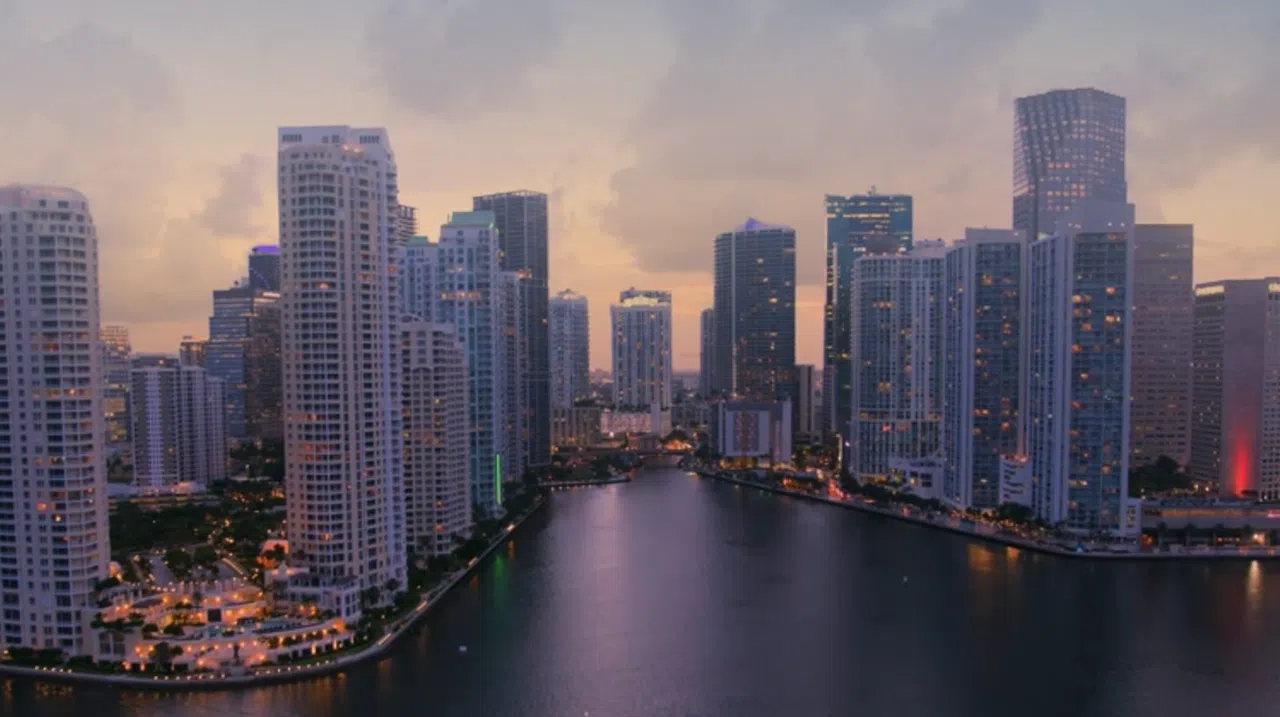
Brickell has no beach, but it has a free elevated train looping between glass condo towers so dense with foreign bank offices that only Midtown Manhattan holds more of them in the entire country. Suits move fast along Brickell Avenue before 9am, coffee carts work the Metromover stops, and by 6pm the whole neighborhood flips from spreadsheet to happy hour without much transition in between. This is Miami's financial district turned dinner-and-rooftop-bar circuit, compact enough that a ten-minute walk puts you at dozens of restaurants, and it rewards a very different kind of traveler than the one chasing South Beach sand.
What Brickell is known for
The name comes from William Brickell, a Cleveland trader who landed at the mouth of the Miami River in 1871 and built a trading post and family home on land that, by the early 1900s, had become "Millionaire's Row" — a strip of mansions running the length of Brickell Avenue. None of those mansions survived the twentieth century. What replaced them is the reason Brickell now gets called the Manhattan of the South: a skyline of international bank towers so concentrated that the neighborhood holds the second-largest cluster of foreign banking offices in the United States, trailing only Midtown Manhattan. That single fact explains almost everything else about the place — the fast walking pace at lunch, the client-dinner pricing on menus, the residential towers that went up around the banks to house the people who work in them.
There isn't a historic district to wander here, no pastel facades or Art Deco lobbies to photograph. Brickell's identity is vertical and current-day: it's a place defined by what's happening in its glass towers right now, not by what used to stand on the ground beneath them.
Where to eat and drink in Brickell
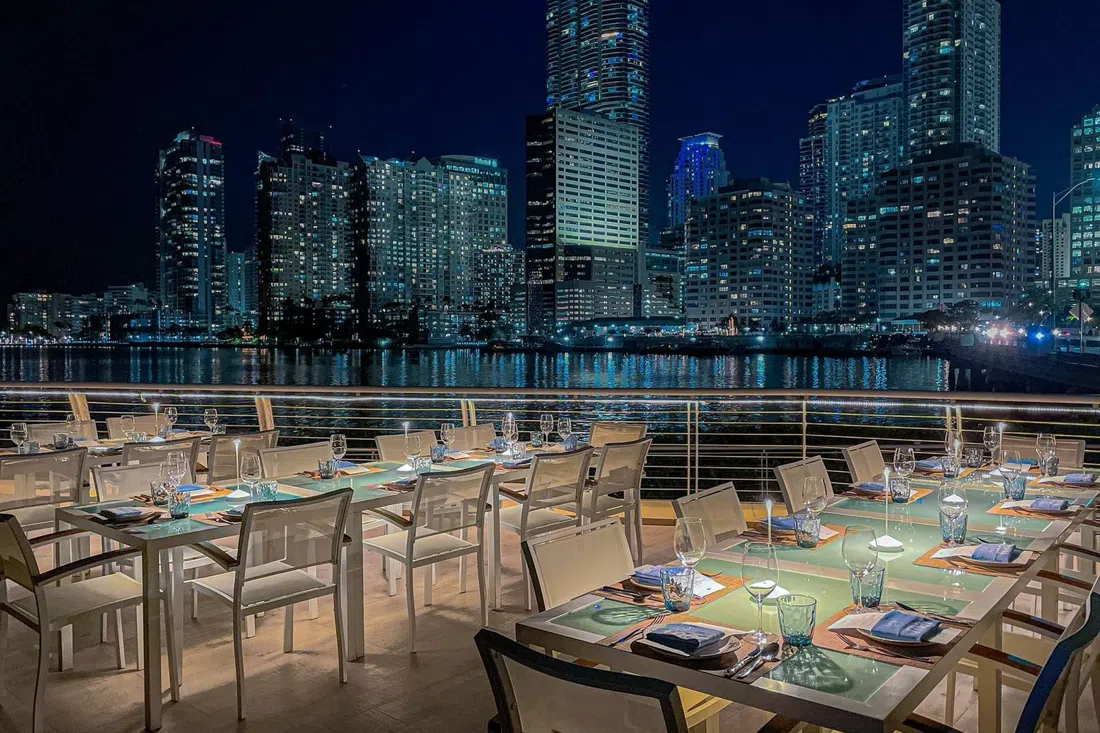
Brickell's dining is upscale by default. This is the neighborhood where law firms and banks hold client dinners, and the menus are priced with that audience in mind — figure on $50 to $100-plus a person at most sit-down tables. The marquee names cluster along Brickell Avenue and the Miami River. Zuma, chef Rainer Becker's modern Japanese izakaya inside the Kimpton EPIC hotel, runs a robata grill and sushi bar with river views, and its loud, all-you-can-eat brunch has become something of a Brickell institution in its own right.
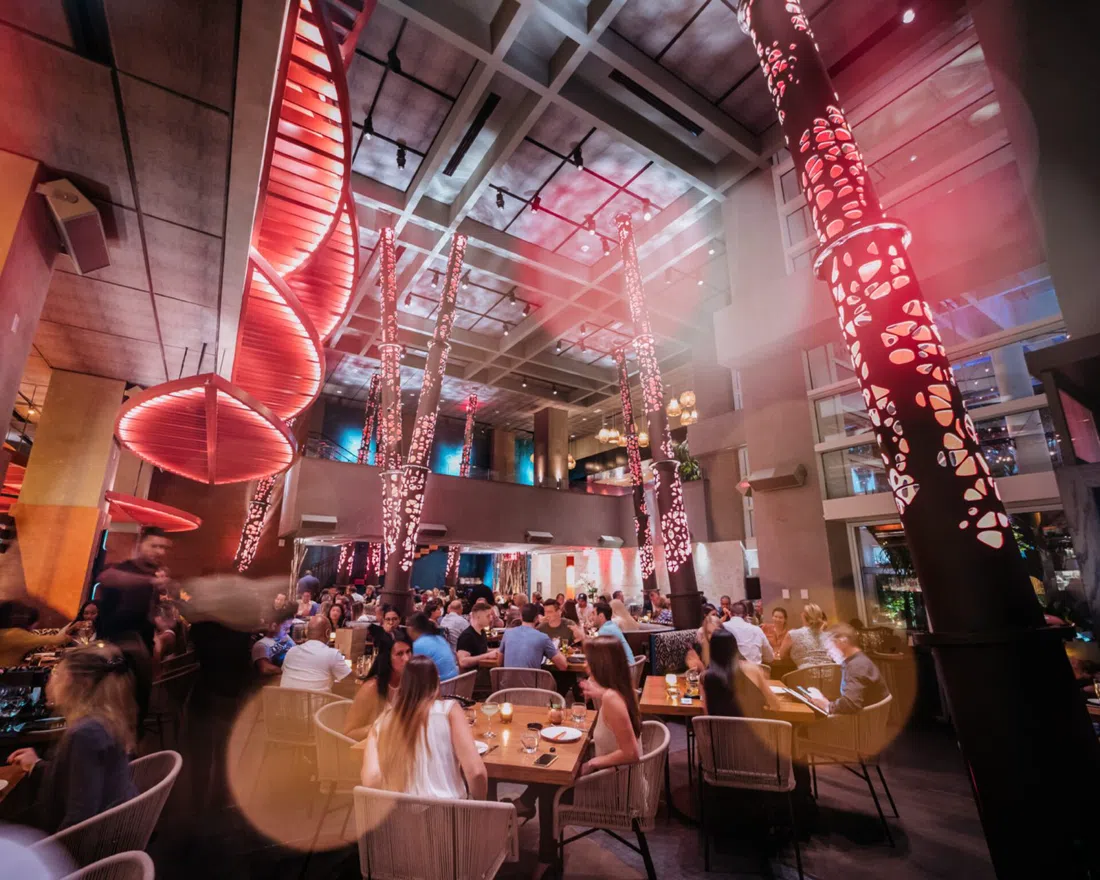
A few blocks over, David Grutman's Komodo does Southeast Asian dining at genuine scale — a 300-seat room built around tableside Peking duck, Wagyu dumplings and a full sushi bar, the kind of place where the theatre of the meal is as much the draw as the food itself. For something quieter and more precise, La Mar by Gastón Acurio spent eleven years perched on Brickell Key before relocating to 1451 S. Miami Avenue in late 2025, after the Mandarin Oriental's closure forced the move; it remains one of the city's best arguments for Peruvian cooking done at a serious level.
Not everything in Brickell demands theatre pricing, though. The River Oyster Bar is the neighborhood's rare value play — big crab cakes, scallops a la plancha, a menu that doesn't try to impress you with production. And Marion, a longtime fixture on Brickell Avenue, reopened in September 2025 after a $4 million redesign with a new Asian-Mediterranean menu, proof that even the neighborhood's old guard keeps reinvesting rather than coasting on address alone.
Rooftop bars and nightlife
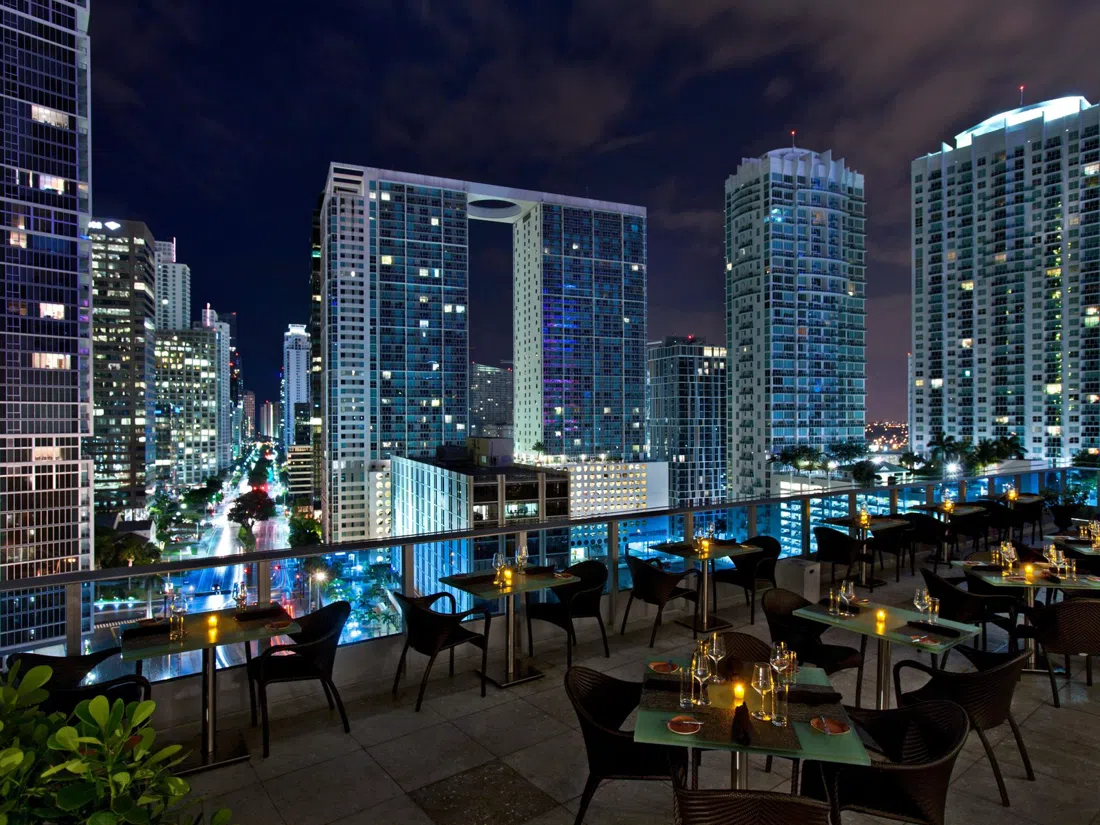
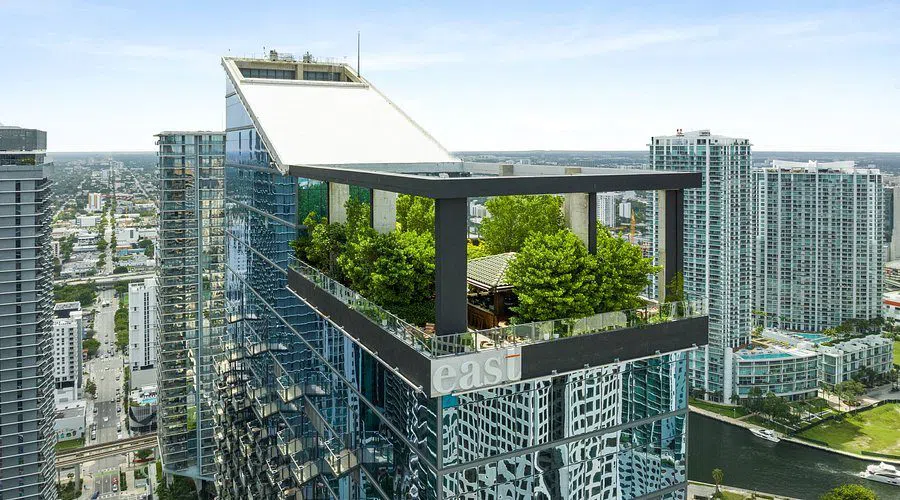
Brickell's nightlife runs vertical. The scene doesn't really live at street level — it lives on rooftops forty floors up, where the skyline itself becomes part of the drink menu. Sugar, on the 40th floor of the EAST, Miami hotel, is the highest of the lot: a Balinese-carved bar wrapped in bamboo and greenery, serving Asian-inspired tapas from 4pm daily before the room shifts into something closer to a club after sunset. It's the single highest bar view in Miami, and it's built its reputation on that fact alone.
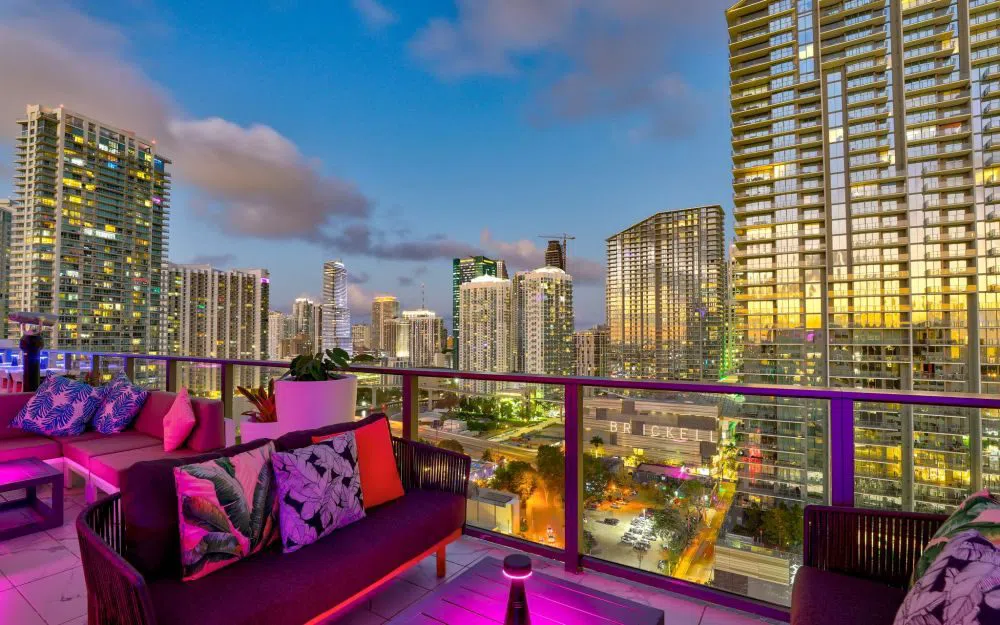
For golden hour specifically, Brickell tends to funnel toward Rosa Sky, the rooftop lounge above the AC Hotel, all neon-pink styling, a rosé list built for the hour, and tapas meant to be shared while the light changes over the bay. It's less about the height than the timing — this is where people land right after work, before the later crowd moves on toward Sugar. Area 31, up at the Kimpton EPIC, plays a different role entirely: a seafood-forward rooftop overlooking the Miami River and the bay that works better as a sunset dinner spot than a late-night destination, the kind of place you'd choose for the view over a meal rather than a nightcap.
What's notable across all three is the total absence of ground-floor bar culture that defines other Miami neighborhoods. Nobody in Brickell is bar-hopping down a street. They're taking an elevator up, picking their floor, and staying there.
What to do in Brickell
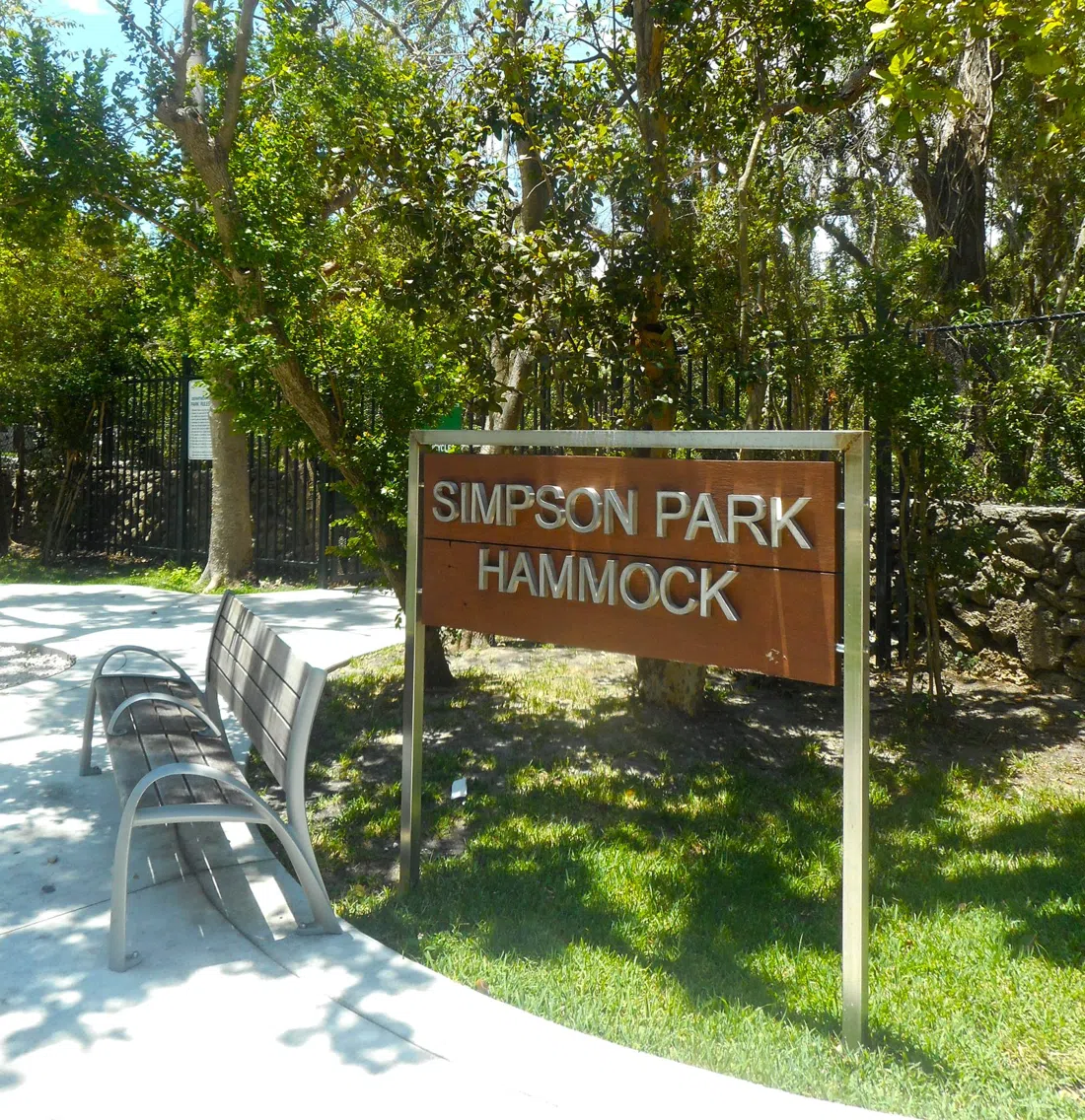
There's no beach here and no museum district — Brickell's sights are its green space and its shopping, and the surprise is how good the green space actually is. Simpson Park Hammock is nearly eight acres of native tropical hammock forest and walking paths tucked directly between the high-rises, a genuine patch of old-Miami ecology that predates every tower around it. It's the kind of place that makes sense of what this stretch of Biscayne Bay looked like before the banks arrived.
The Underline is Brickell's newer green space, and its opening stretch — Brickell Backyard — runs half a mile under the elevated Metrorail line, with a dog run, an outdoor gym and free weekend yoga sessions. It's the first completed piece of what's planned as a ten-mile linear trail eventually connecting Brickell all the way to Dadeland, and even in its current, shorter form it gives the neighborhood something rare: a stretch of public space built for lingering rather than passing through. For a rainy day, Brickell City Centre covers the indoor alternative, with a CMX VIP cinema, an Escape Game and a Puttshack mixed in among the retail.
Shopping in Brickell
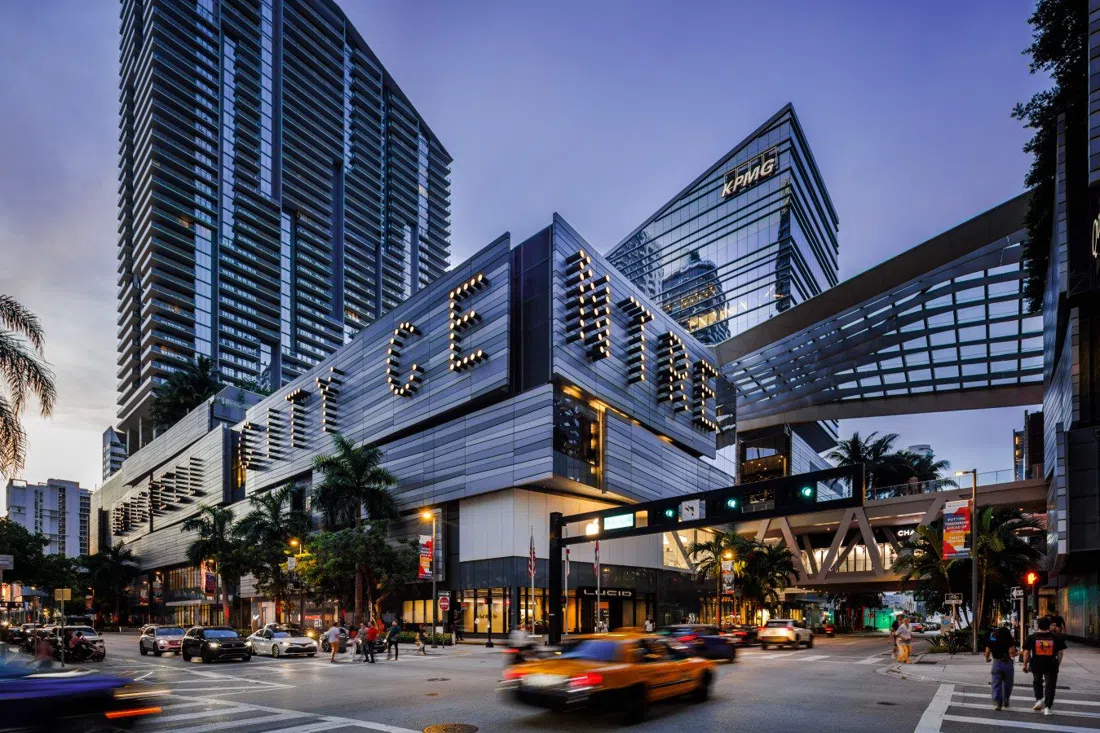
Brickell City Centre is the shopping anchor and, for most visitors, the only shopping stop that matters here — three levels of open-air mall running under a wave-shaped climate ribbon designed to cut the heat without sealing the whole thing indoors. It's built around a flagship Saks Fifth Avenue and runs through the expected upscale mix: Zara, Mango, Apple, Chanel, Coach, Sephora, lululemon. More than a dozen restaurants and food-hall stalls are threaded through the retail floors, which means it functions as much as a dinner option as a shopping trip — you can browse Chanel and eat well in the same building without crossing a street.
Where to stay in Brickell
Brickell suits travelers who want a modern high-rise stay within walking distance of dinner and a rooftop bar, not a beach chair. EAST, Miami and the Kimpton EPIC both put you inside the restaurant and bar scene itself rather than a cab ride from it — Sugar and Area 31 are downstairs or upstairs, not a separate outing. W Miami sits in the same general orbit, part of the same cluster of high-rise hotels that make Brickell workable without a car. Expect to pay accordingly: this is one of Miami's priciest neighborhoods to sleep in, with $200-plus a night the realistic floor rather than the ceiling.
Getting around Brickell
Brickell is the one part of Miami genuinely built for walking and transit rather than a car, which is worth knowing before you book a rental. The free Metromover — an automated, elevated people-mover — loops the neighborhood on the Brickell Loop, stopping every few blocks at stations including Brickell City Centre and the main Brickell station, and it costs nothing to ride. That station also connects to Metrorail's Orange Line, which runs direct to Miami International Airport in about 25 to 30 minutes — a genuinely useful option in a city where most neighborhoods leave you dependent on a car or a rideshare. A taxi or rideshare covers the same nine miles to the airport in anywhere from 15 to 40 minutes depending on traffic, which in Brickell, at rush hour on Brickell Avenue, is a bigger daily hazard than anything related to crime. The neighborhood is one of Miami's safer, better-lit areas, busy with pedestrians well into the evening — the real friction here is gridlock, not danger.
What Brickell isn't built for is a beach trip. There's no sand in the neighborhood itself, and South Beach is a 20-to-25-minute drive away, which matters if that's the postcard you came for. What it is built for is a specific kind of visit: business travelers who want a hotel gym open before 6am and a walkable meeting radius, foodie couples who want a dense, upscale restaurant scene without renting a car, and anyone who considers a skyline view from forty floors up a destination rather than a bonus. For that traveler, the free train and the glass towers aren't a compromise — they're the point.