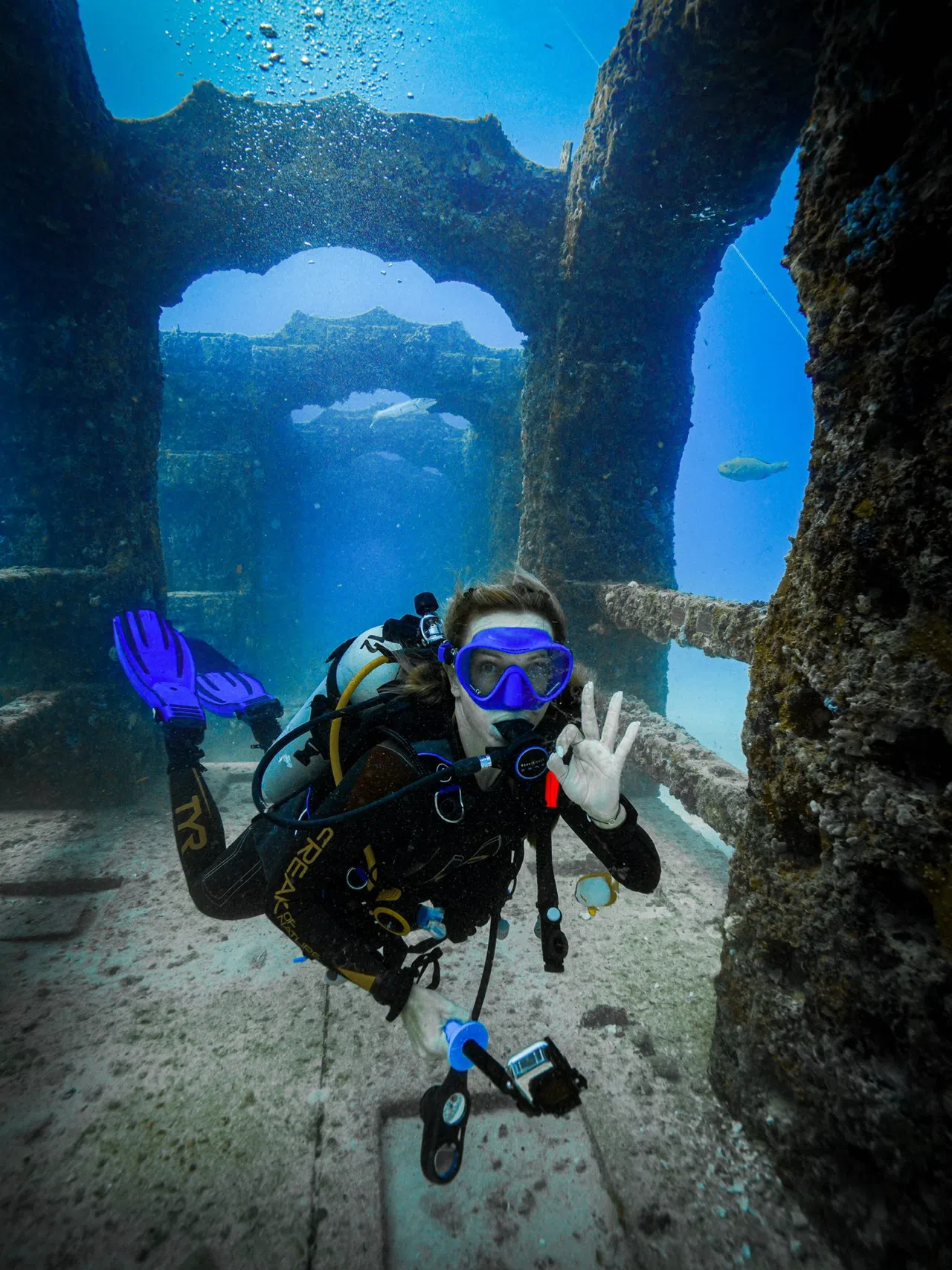

The spiny lobster has no claws, which is the whole reason catching one comes down to a tickle stick, a short-handled net and the nerve to put your face into a ledge you cannot see the back of. For two days at the end of each July, several thousand people in Miami take the morning off work to do exactly that, and the dive shops, the charter phones and half the raw-bar boards in the city bend around them. The rest of the year the same animal sits under the same ledges, entirely legal to take, with nobody queueing at the ramp before dawn.
What the two-day dash actually is
Florida runs a recreational sport season for spiny lobster on the last consecutive Wednesday and Thursday of July. Locally it is mini-season and nobody calls it anything else. In 2026 that was 29 and 30 July. In 2027 it falls on 28 and 29 July, and if you intend to plan a trip around the frenzy itself, those are the dates to book flights against, not the week before and not the weekend after.
The part most visitors never hear changes the shape of the whole trip: the regular eight-month season opens on 6 August and runs through 31 March. The season is open now and stays open until 31 March 2027. You can dive for lobster in October with a guide to yourself, at standard pricing, on a boat that is not fighting for a mooring ball. The two days are the spectacle. The eight months after them make the better holiday.
The rules are not complicated but they are enforced, and officers are visibly on the water during the July window. You need a Florida saltwater fishing licence with the spiny lobster permit, and you need a measuring gauge in your hand in the water, because the carapace has to clear three inches, measured before the animal comes aboard. Egg-bearing females go back. Spearing lobster is illegal, which is why the gear is a net and a snare rather than anything with a point. Bag limits are the part people get wrong: during mini-season it is twelve per person per day in most of the state but six per person in the Keys and inside Biscayne National Park, and for the regular season it is six per person per day. Confirm the current numbers with your operator the morning you sail, because the state and the park set them separately and a good captain will recite them unprompted.
The season reaches a long way past the water, which is what makes it a Miami story rather than a fishing footnote. Charter operators add a flat mini-season surcharge. Dive shops run out of tank fills. Restaurants that spend most of the year selling imported tail put local spiny on the board. Families book the same two days off every summer the way other cities book a public holiday. If you are building a broader itinerary around it, the Miami guide covers the rest of the city; this piece is about the water and the plate.
Diving it without leaving the city
Diver's Paradise (island marina, a 20-minute drive east of Brickell) is the closest thing the city proper has to a lobster-season base camp, and it holds a permit nobody else has: it is the only commercial operator allowed to take divers and snorkellers into the northern quadrant of Biscayne National Park. That is a 20-minute transfer from the financial district to a national park reef, which no other major American city can offer. Open seven days, 9am to 5pm, with daily open-boat departures plus private charters and group bookings. Trips run roughly $100 to $130 per person; pre-paid five- and ten-trip packs cut 10 to 15 per cent off, which is worth doing if you are in town for a fortnight or you are two people diving four times. They also run bay cruises, which solves the standing problem of the mixed group, since the two non-divers in the party get their own boat trip instead of a day in the hotel. Remember the park-specific limits: six per person, and the five Coral Reef Protection Areas inside the park are permanent no-take zones rather than seasonal ones.
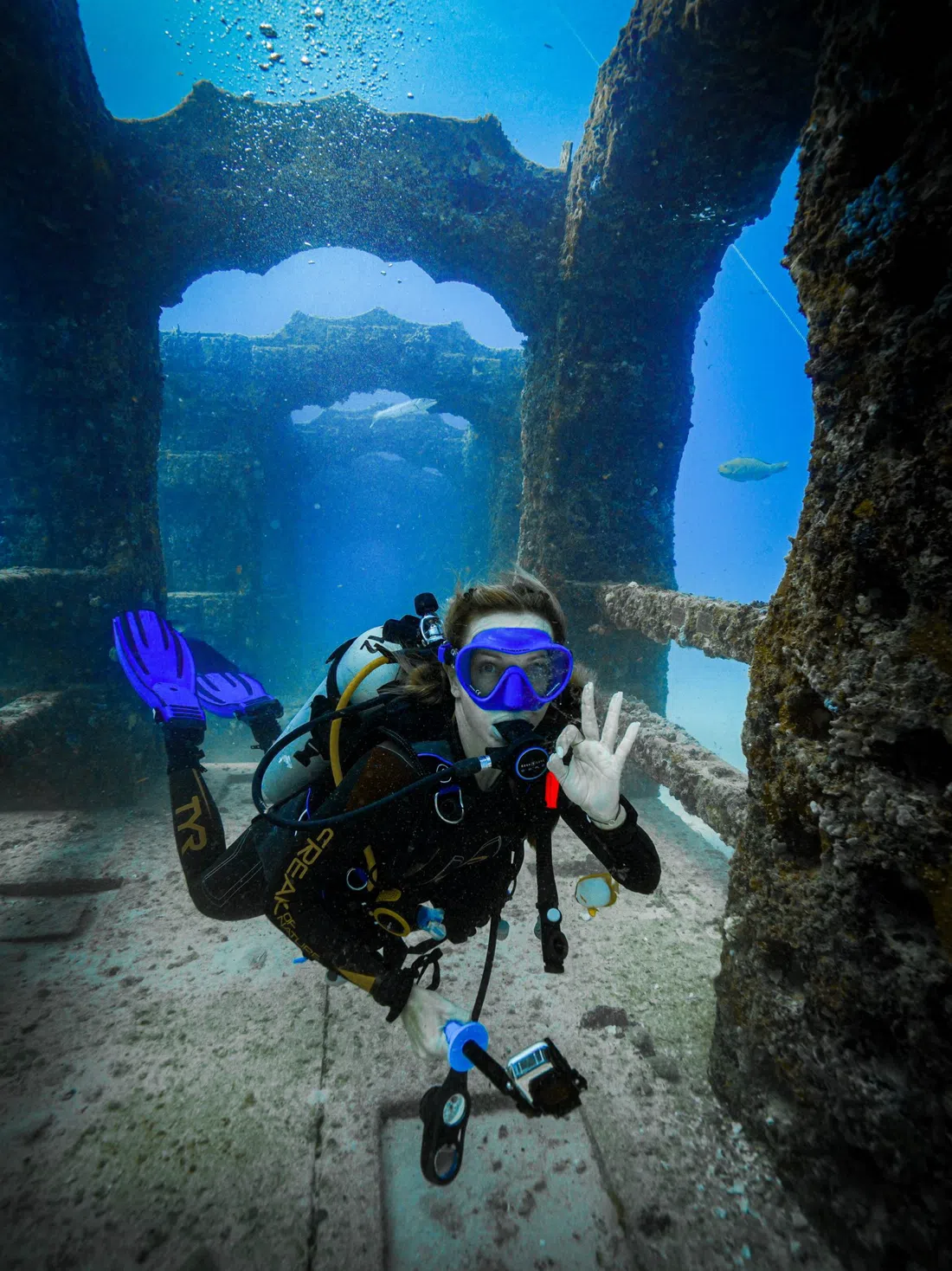
Forever Young Charter Company (private departures, phone booking 24/7) is the premium option and the honest answer for a first-timer who wants to actually come home with dinner. The boat takes up to four scuba divers or six freedivers and it is private only, so one family or one friend group buys the whole vessel: $1,300 for a half day of four hours, $1,600 for six, $1,900 for eight, plus $200 during mini-season. That includes an in-water lobster guide, tanks, weights and all the catch gear, and the guide is the reason to book it. Most beginners fail on technique rather than fitness: they approach the ledge head-on, the lobster flicks backwards into the rock, and they spend the dive chasing animals that saw them coming. Someone showing you where to put the tickle stick is the difference between six lobsters and none. Per head it looks expensive until you fill the boat. Six freedivers splitting the half day is around $215 each, roughly double an open-boat seat for a much better hit rate. Two people paying $1,500 for the same four hours is a harder sell.
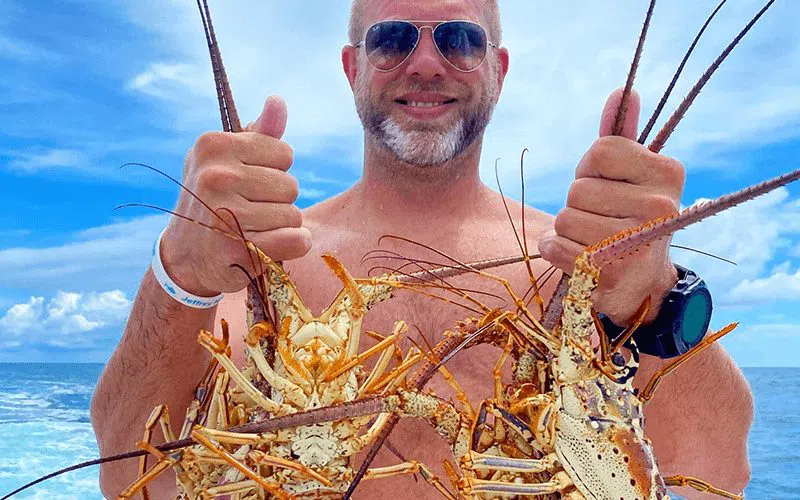
Going south for a guided hunt
Scuba-Fun (Upper Keys departures, phone 8am to 7pm daily) caps guided hunts at four divers per guide, stretched to six if you are a single family or friend group, and that cap is the reason to use them: four people to one guide means you are being coached, not herded. The two-tank trip starts from $110 plus tax per person with tanks and weights included, and the guided hunt add-on is $65 per person for two or more, or $90 if you are solo. They confirm on their own site that lobster trips are running now through 31 March 2027, which settles the idea that this is a July-only activity. Bring your own Florida licence and lobster permit, because they will not sell you one, though they will point you at the local shop for the roughly $40 of personal gear you need. They operate from three separate harbours along the Upper Keys stretch of the highway, so confirm which one you are driving to when you book; the difference between them is twenty minutes of road, and people get it wrong.
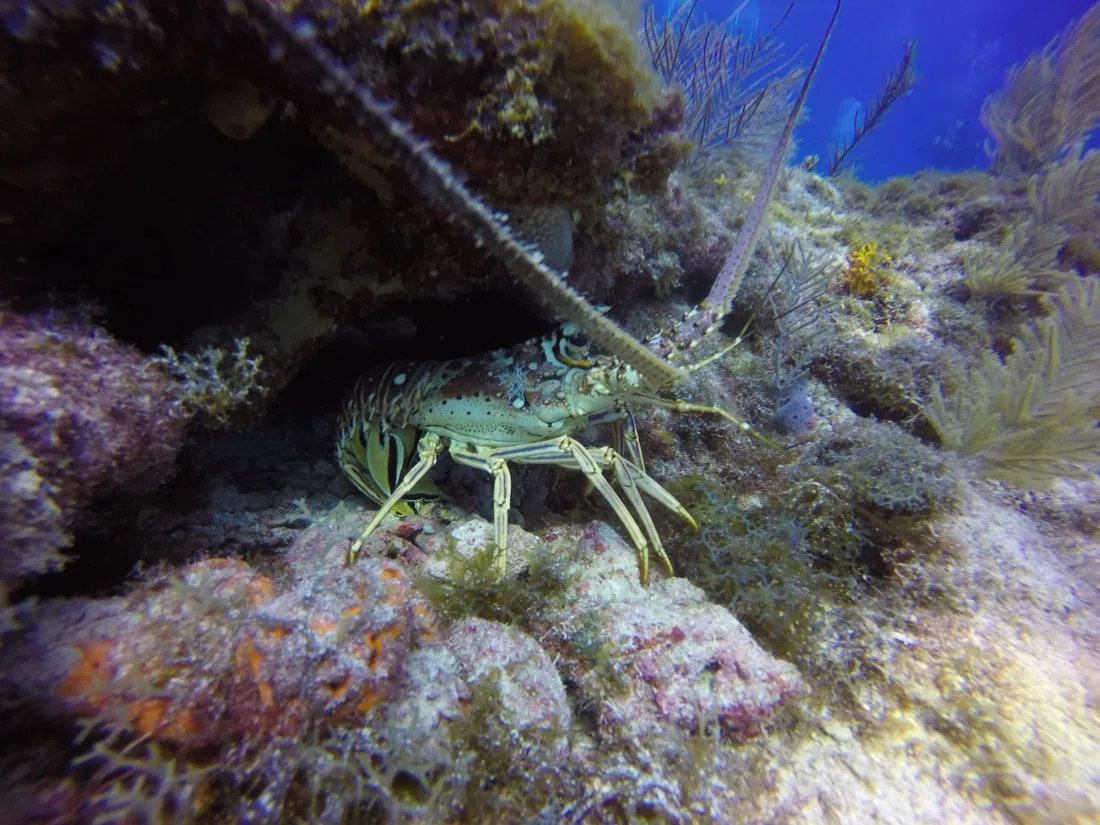
Sea Dwellers Dive Center (Upper Keys) is the call if your group is too big for everyone else. Their private charter takes up to 28 passengers at a $1,500 base rate with a 50 per cent deposit, the largest group capacity among the Upper Keys lobster operators we verified, so nobody gets left standing on the dock arguing about who dives in the second wave. On scheduled departures it is $110 per person for the two-tank lobster-season dive, $80 to snorkel, and $60 for what they call bubble-watchers, the non-swimmers who come along for the ride. They publish lobster-season diving as a standing August-to-March product rather than a two-day stunt, which tells you something about how they staff it. For a stag group, a dive club or three generations of one family, this is the straightforward booking.
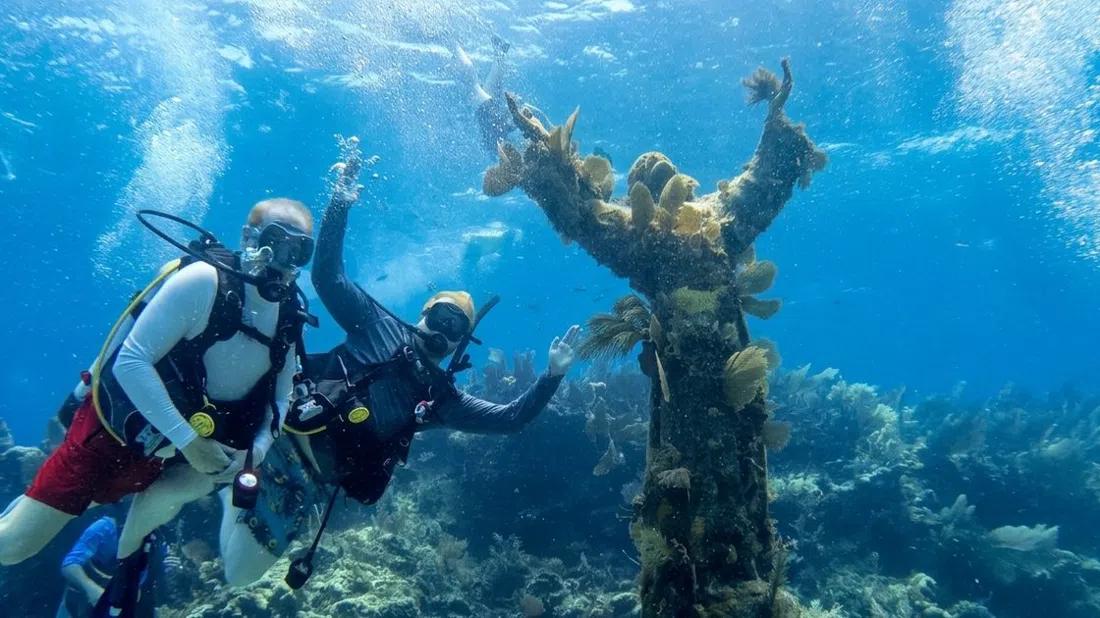
The reef with nothing taken off it
Biscayne National Park Institute (national park waters, departures from the park) is the counterweight to all of the above, and it belongs in any honest account of the season. Nothing is harvested on these trips. The half-day snorkel runs 3.5 hours from $115 per person, groups are capped at 16, and private bookings are available: a small private boat for six is around $1,254, with school and organisation groups taken by request. Book it if you have children too young to dive, a partner who has no interest in killing anything, or simply the curiosity to see what the two-day dash is taking lobsters out of. A healthy ledge with four or five animals under it, left where they are, makes the bag limits read as arithmetic rather than bureaucracy. It is also the better trip for anyone who gets seasick in full dive kit, since you are in the water within sight of the boat the whole time.
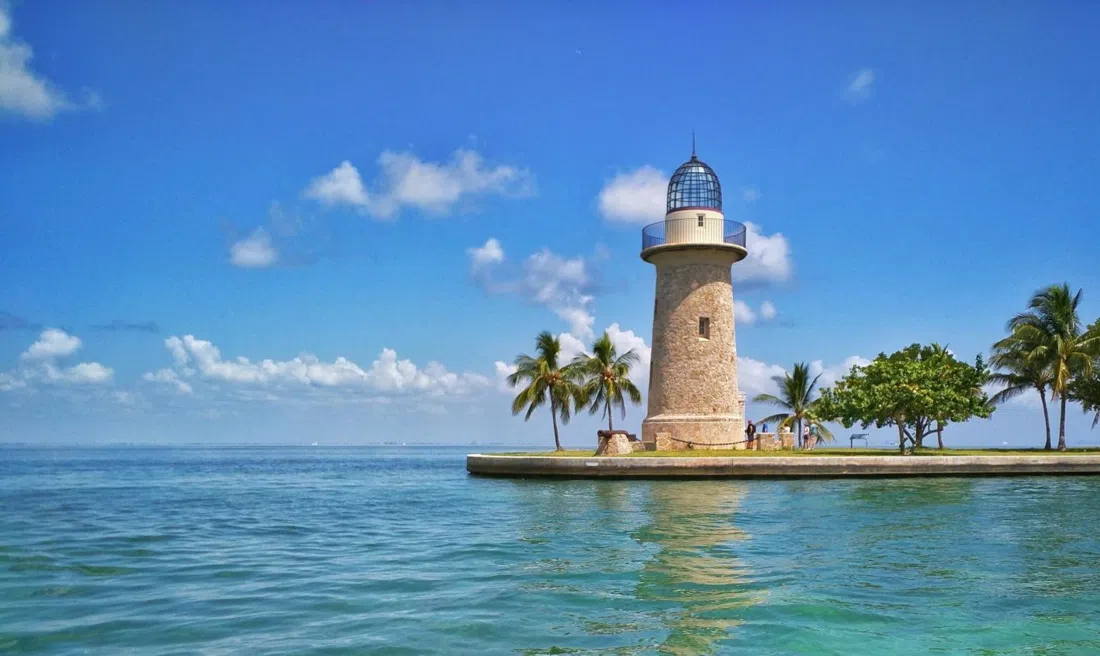
Where the city eats it
Joe's Stone Crab (South Beach) earns its place here for one line on the menu rather than for its reputation. Florida lobster tail is listed at $59.95 and imported lobster tail at $35.95: the same dish, a $24 premium for local, printed by a restaurant with no incentive to flatter the local fishery. That is the clearest price signal in the city that spiny caught off this coast is the better product, and it is worth knowing before you order lobster anywhere cheaper. The lobster roll is $44.95. The trading reality: most parties cannot reserve, the peak wait is genuinely long, and a group only works here if you accept the queue or book one of the larger private rooms well in advance. Stone crab season reopens on 15 October, so an autumn visitor can get local spiny and claws on the same table, which is the single best argument for timing a Miami seafood trip for October rather than July.
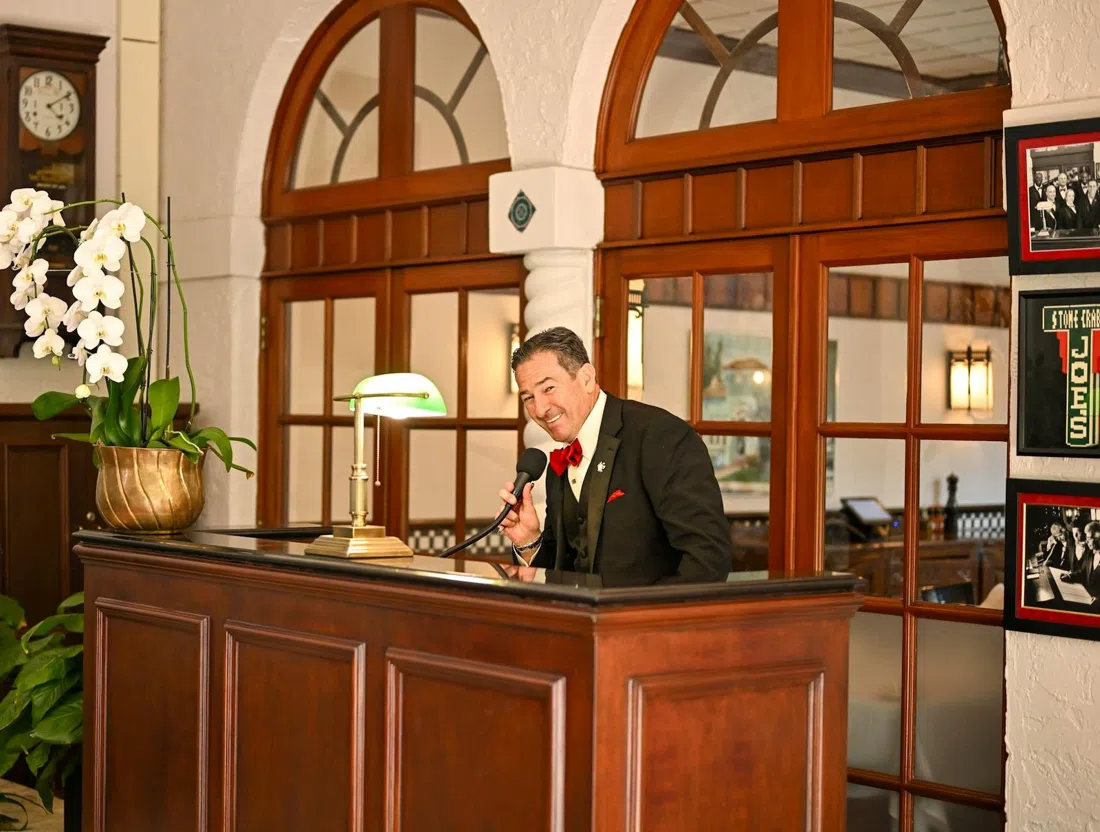
Monty's Raw Bar (Coconut Grove) is the opposite proposition and the strongest group venue on this list. Open since 1969, waterfront, with docks you can arrive at by boat and banquet capacity running from 25 to 1,000, it hosts fishing tournaments and private events, and it absorbs the kind of crowd that would break a 40-seat kitchen. Raw bar and shared plates run roughly $15 to $40 with lobster at market price. Go for the setting, the shucked oysters and the fact that a boat full of sunburnt people can land here at 4pm without a reservation and be fed. Do not go expecting precision cooking; that is not what the place is for.
Where the catch comes ashore
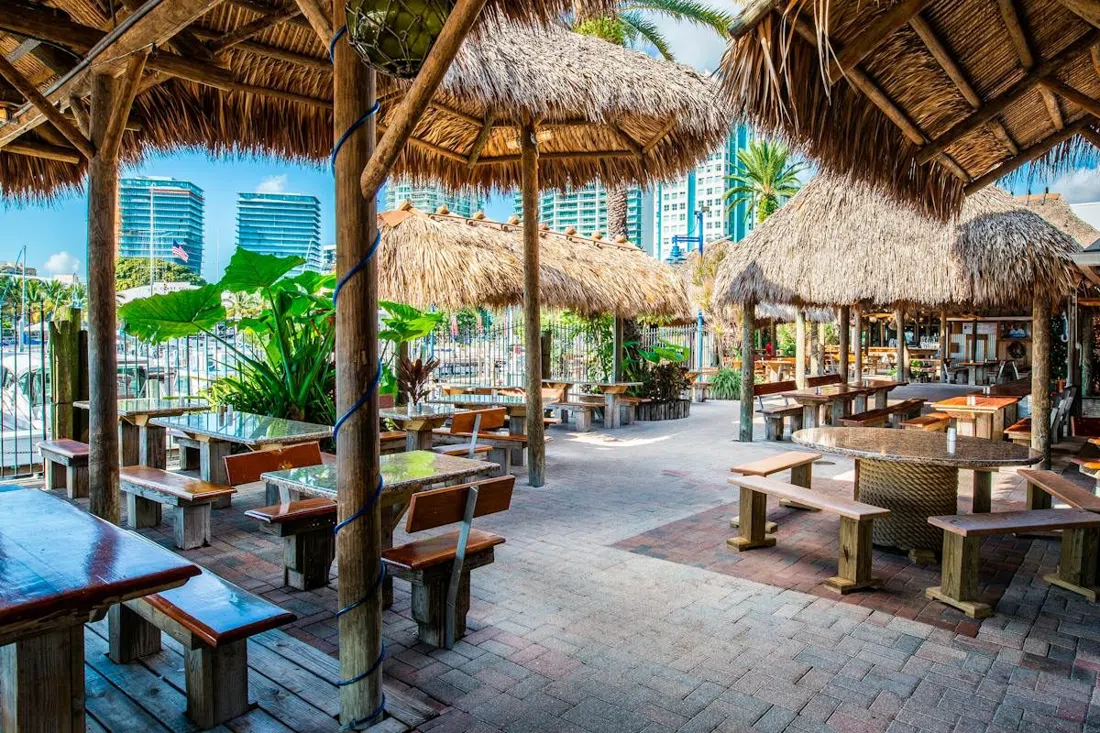
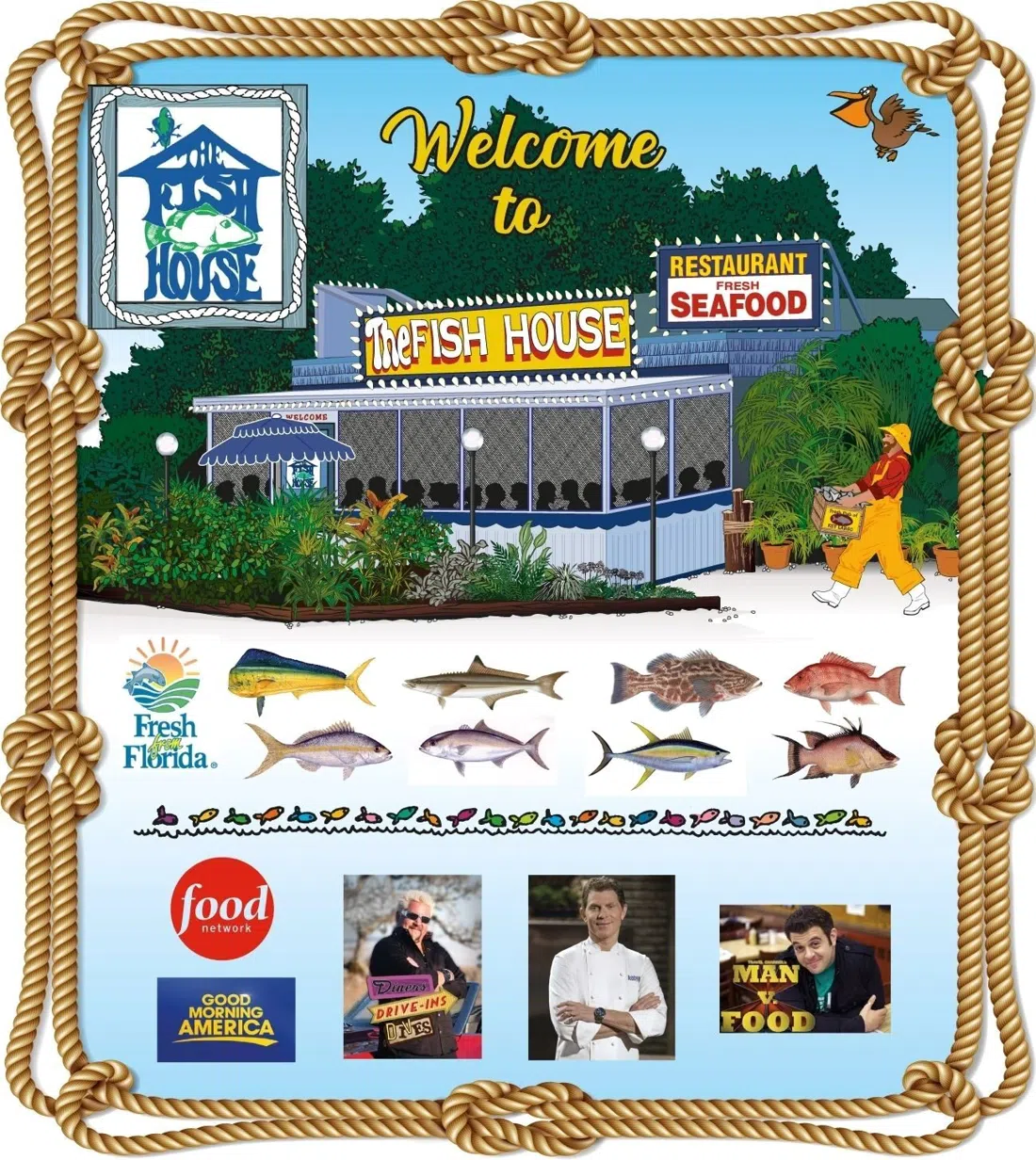
The Fish House (Upper Keys) is the most direct trapper-to-plate line on this list. Open since 1982, it buys only whole fish from local commercial fishermen, with lobster and stone crab brought in off the boat by local trappers. Mains are roughly $25 to $45 with lobster and stone crab at market price, and the attached market will pack lobster for the drive home. Two warnings, both of which have caught people out. There are no reservations, and their own position is just come on in, so a large group should expect to split tables or wait. They also close for an annual maintenance-and-vacation break in early autumn, so phone 305-451-4665 before committing to the drive. Their sister restaurant Fish House Encore has closed permanently, so ignore any listing that still sends you there.
Mrs. Mac's Kitchen (Upper Keys) solves the group problem by accident: one operator, two separate storefronts on the same highway, the big one at 99336 and the little one at 99020, a few minutes apart, with the same kitchen behind both. When a party of fourteen rolls in without a booking, and there are no bookings, that doubled seating matters. The Caribbean lobster plate is $39.99 and is a whole local tail, grilled, sautéed or fried; thermidor is $42.99, the lobster basket $38.99, and the lobster and shrimp grilled cheese $25.99, which is the order to make if you want to understand why people drive down for this. The licence-plate walls are the most photographed interior in the Upper Keys, for whatever that is worth to you.

Keys Fisheries Market & Marina (Middle Keys) is billed as the home of the Lobster Reuben and it earns the claim: sweet Florida spiny on toasted rye with kraut, Swiss and Thousand Island, around $32, eaten at a picnic table on a dock that is actively processing the catch behind you. You order at a window, there are no reservations, and the format absorbs groups without fuss. Open 11am to 9pm daily, with a market counter selling lobster, pink shrimp and stone crab by the pound. One logistical flag for anyone flying in: this is roughly a two-hour drive from the city, so pair it with an overnight rather than attempting it and the return leg in a day.
Transport, money and timing
You need a car for anything south of the city. There is no useful public transport down the Keys, and the Overseas Highway is a single road where one collision means two hours of stationary traffic. Leave early, and if you are driving to a boat during mini-season, leave absurdly early: ramps and marina car parks fill before first light on 29 July and its 2027 equivalent. City-side diving needs no car at all, since the island marina is a 20-minute ride from downtown or Brickell.
Cards work everywhere, including the dock markets, but carry $100 to $200 in small notes for crew tips, which are expected and not included: $20 to $40 per person per trip for a good day, more if a guide put lobster in your net. Restaurant tipping runs 18 to 20 per cent.
Budget: an open-boat city dive is $100 to $130 per person; a guided Upper Keys two-tank hunt lands around $175 to $200 once you add the guide and tax; a private boat is $1,300 to $1,900 and only makes sense split four to six ways. Add roughly $40 for personal gear and the cost of the licence and lobster permit, and $35 to $60 a head for dinner afterwards. For sleeping, base yourself in the city and treat the Keys as one overnight rather than a daily commute. Start with the Miami hotel search, then book the boat before the bed, because boats sell out first.
Come in late July if you want to witness the thing, with charters booked months out and a surcharge paid. Come between October and March if you want to catch lobster, which is a different holiday and the better one.