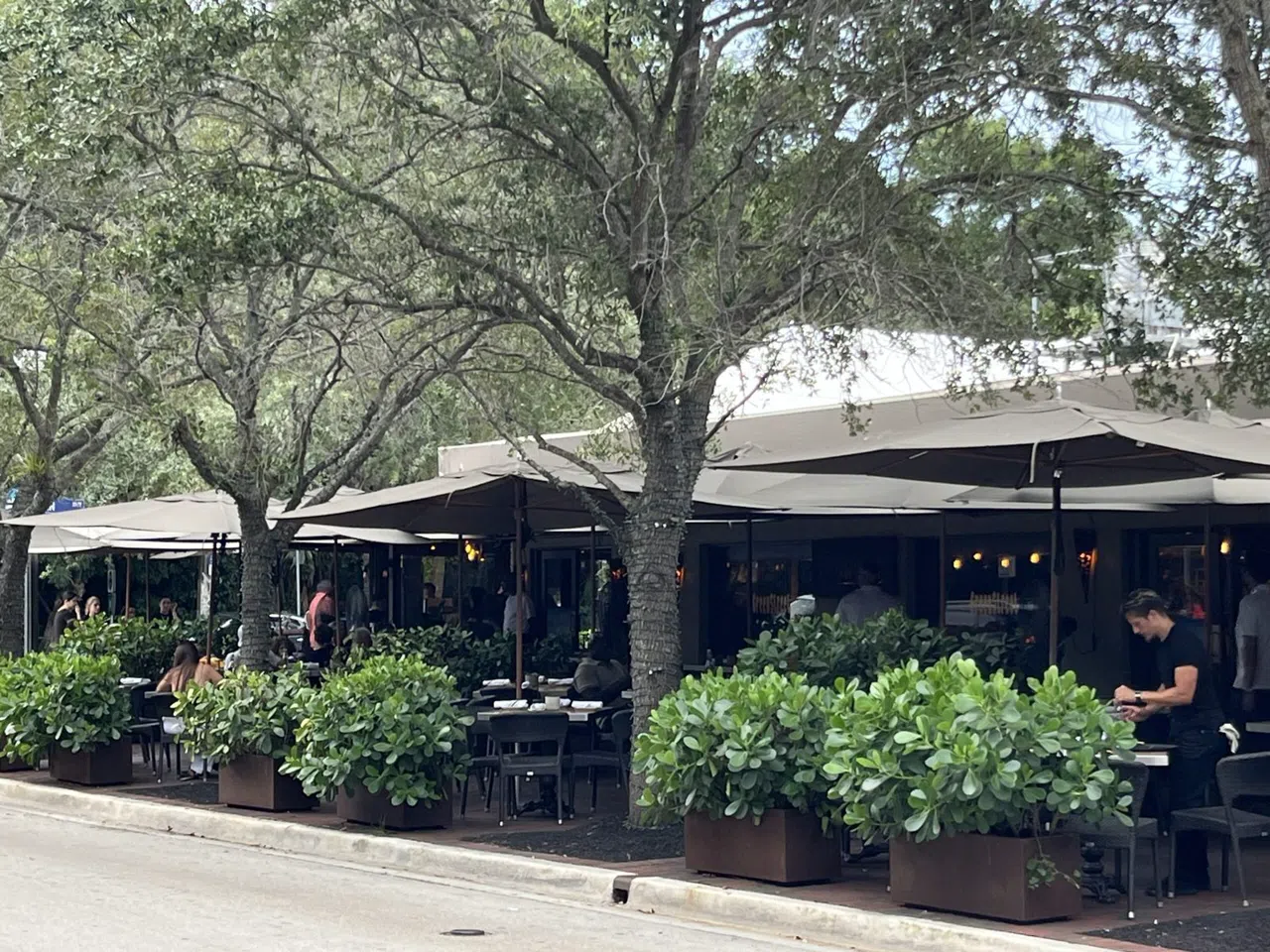
Sailboats stack up three and four deep at Dinner Key Marina — 587 wet slips of them, riding the chop off Biscayne Bay — while half a mile inland the brunch crowd at Commodore Plaza spills off the sidewalk tables and onto the curb before ten most Saturdays. Coconut Grove was founded in 1873, twenty-three years before Miami itself incorporated in 1896, and it still behaves like the older, more self-possessed relative at the family reunion: an incorporated municipality in its own right until 1925, and a neighbourhood that has never fully absorbed the idea that it belongs to anyone else's grid. Banyan and live oak arch over streets that curve and dead-end at the water instead of running straight, the canopy thick enough in places to blot out the sun that defines everywhere else in this city. It's a village stitched into a metropolis, and lately it's been quietly assembling one of Miami's most serious restaurant scenes to go with the sailcloth and the shade.
What Coconut Grove is known for
Ask a longtime Miamian what the Grove is and you'll get some version of the same answer: it's the neighbourhood that was there first. Settled in 1873 by Bahamian and New England arrivals who came for the climate and the bayfront, Coconut Grove predates the city of Miami by more than two decades, and its street plan still shows it — curving, tree-shaded lanes laid out by people who weren't yet thinking in a grid, because there wasn't one to think in. That independence held formally until 1925, when the Grove was folded into Miami proper, and informally it has never really stopped. Locals will tell you, not always kindly, that the rest of the city built up; the Grove just grew leaves. The result is a neighbourhood that reads like a small town under a green roof — Commodore Plaza's café tables spilling onto the sidewalk each morning, dog walkers cutting through the shade, a pace that has more in common with a Caribbean port town than with the towers going up six miles north in Brickell.
Where to eat and drink
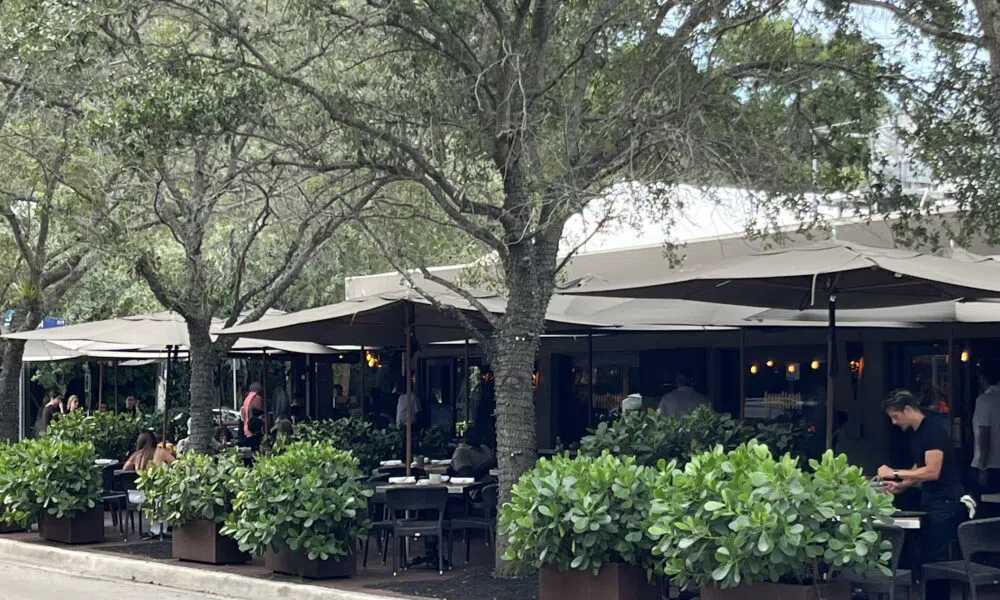
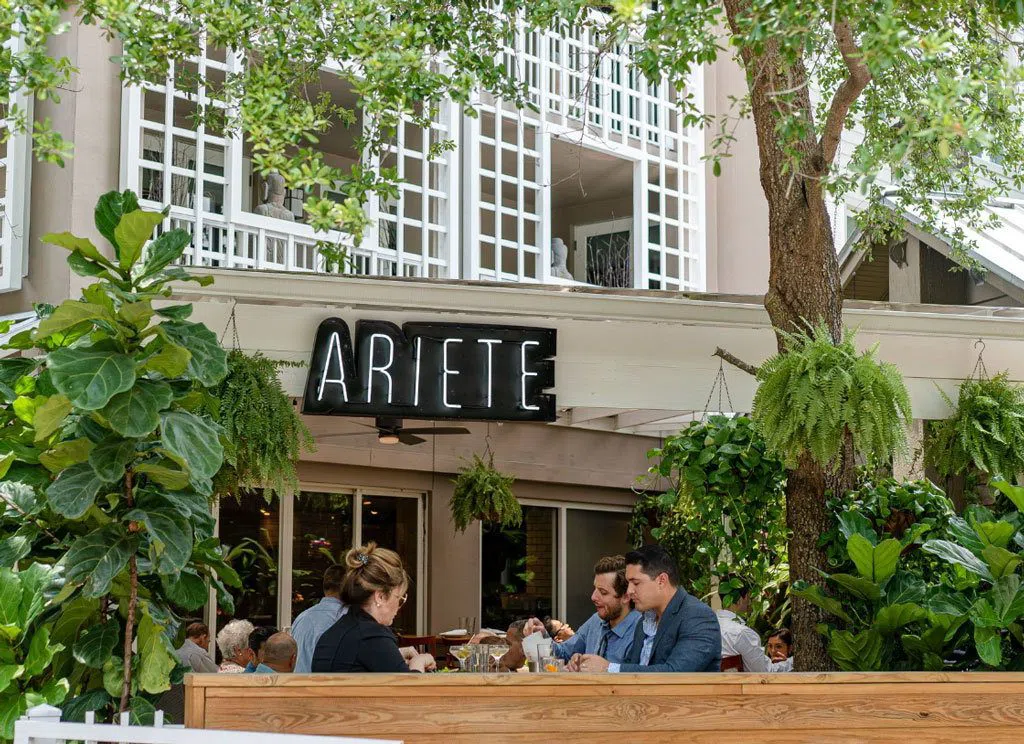
The food is where the Grove has quietly outgrown its old reputation as a place you visit for the marina and stay for the trees. Chef Michael Beltran is the throughline: at Ariete (3540 Main Hwy) he runs the neighbourhood's fine-dining flagship, a kitchen that takes Cuban homestyle cooking and pushes it through a contemporary, French-leaning lens — duck canard à la presse shows up on tasting menus that book out well ahead, and it's worth locking down a reservation before you land.
A few doors down at 3444 Main Hwy, Beltran's second act, Chug's Diner, does the opposite trick: a Michelin Bib Gourmand nod for food that's deliberately loose and playful, Cuban-American diner cooking at prices that don't require the same advance planning.
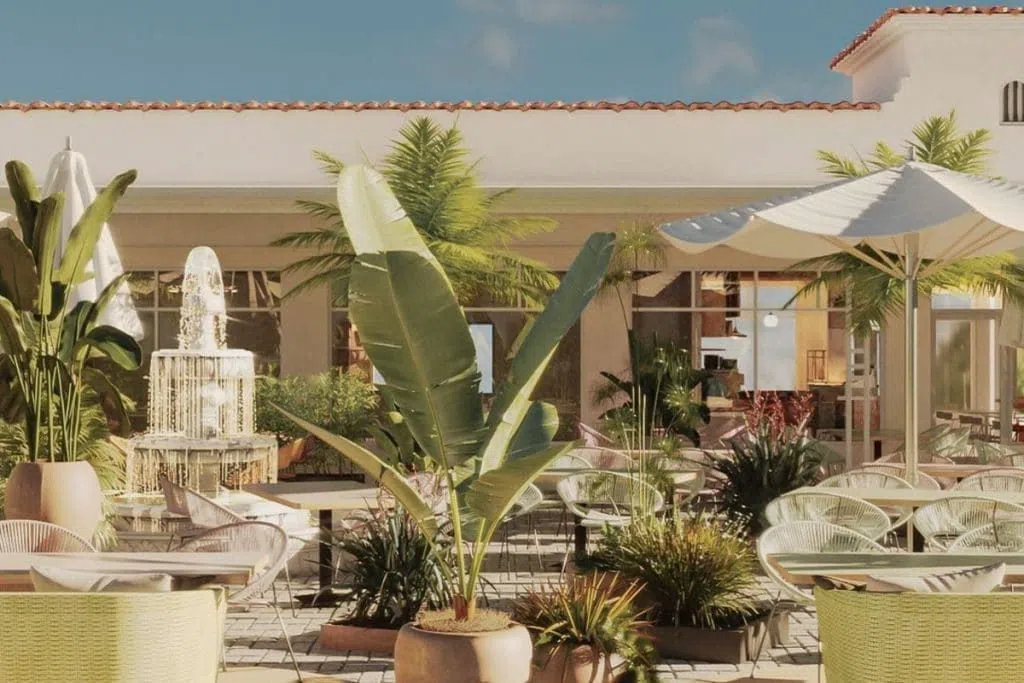
For something quieter, Krüs Kitchen pairs Michelin-recommended, Green Star-awarded seasonal cooking with a candlelit dining room walled in glass block — the kind of place you book for an anniversary rather than a Tuesday. Le Bouchon du Grove has been running its Lyon-style bistro program for three decades, escargot and duck confit arriving with a glass of complimentary champagne, a small touch that's kept regulars loyal since long before "Cuban-French tasting menu" was a phrase anyone used about this neighbourhood.
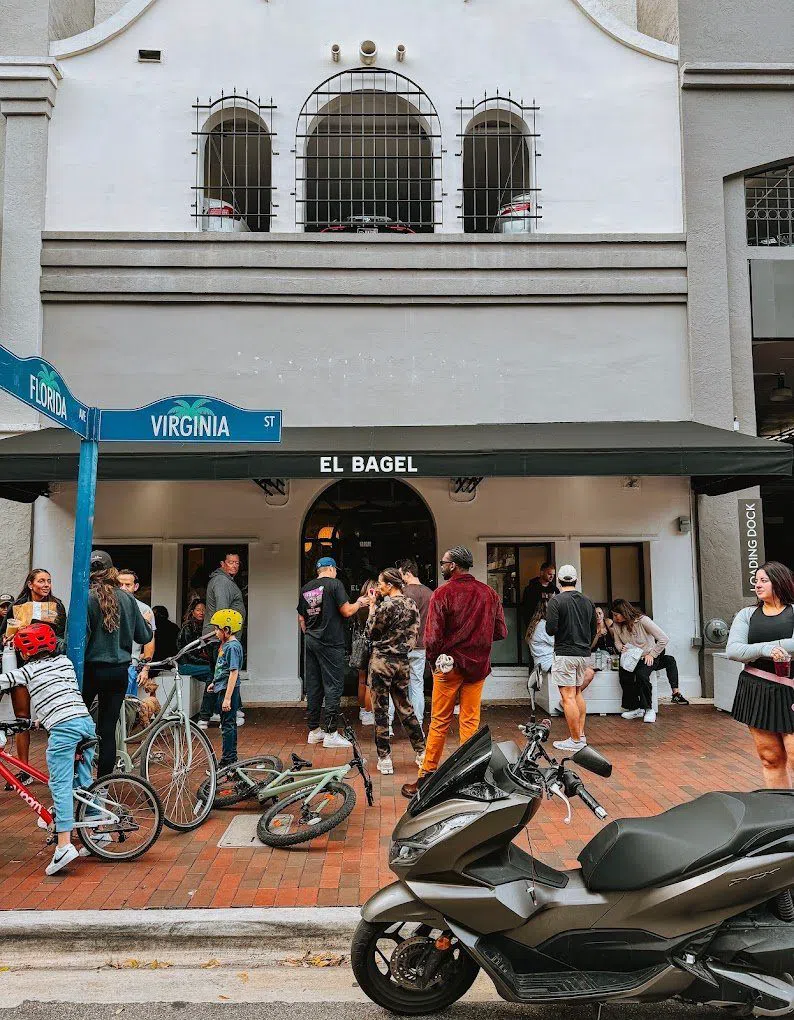
Morning belongs to GreenStreet Cafe, the Grove's classic sidewalk brunch spot right on Commodore Plaza, and to El Bagel, where hand-rolled, slow-fermented bagels come out of the oven fresh each night and pull genuine queues out the door on weekend mornings — arrive early or accept the wait as part of the ritual.
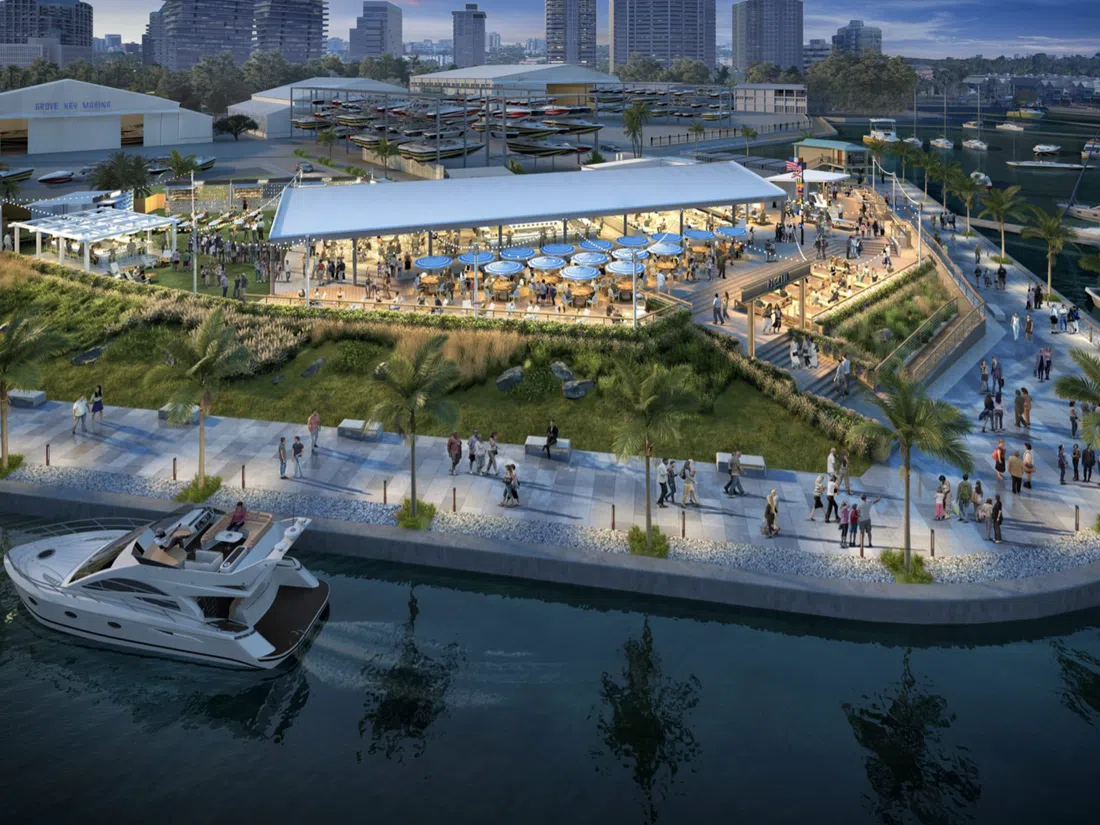
For dinner with a view, Loretta and the Butcher runs an Argentine parrilla off a compact deck on Commodore Plaza, house-made chimichurri and steaks doing the heavy lifting, while Regatta Grove has become the neighbourhood's most ambitious single address: a one-acre waterfront dining hub built around five separate kitchens from chefs carrying Michelin and James Beard recognition, essentially a food hall for people who take food halls seriously.
Nightlife
The Grove was never going to compete with South Beach on volume, and it doesn't try. What passes for a big night out here is a rooftop, a wine list, or — on a good Thursday — stand-up comedy at a bar that's been pouring since before most of Miami's clubs existed. Level 6 sits atop the Lebanese restaurant Amal at 3480 Main Highway, a rooftop lounge with wraparound views of Biscayne Bay, Spanish-inflected small plates and cocktails built with enough care that you'll find yourself ordering a second even when you'd planned on one.
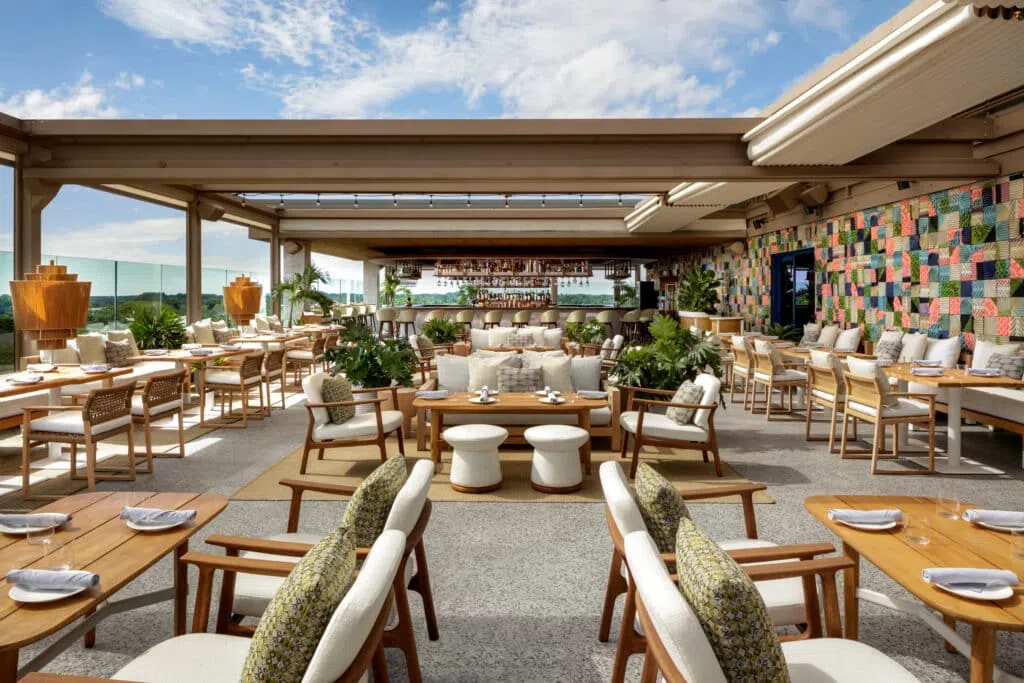
The Taurus holds Miami's oldest liquor license and wears it accordingly — unpolished bar food, a crowd that's been coming for years, and Thursday comedy nights that draw a different energy than the postcard version of Miami nightlife. And at Mr. C Miami, Bellini turns the hotel's rooftop into an Italian restaurant-bar with its own panoramic bay views, a slightly dressier answer to the same golden-hour instinct. None of this runs much past midnight with any real conviction. If you're chasing a club, you're in the wrong neighbourhood; if you're chasing a good drink with a view and a reasonable bedtime, you're exactly where you should be.
Things to do
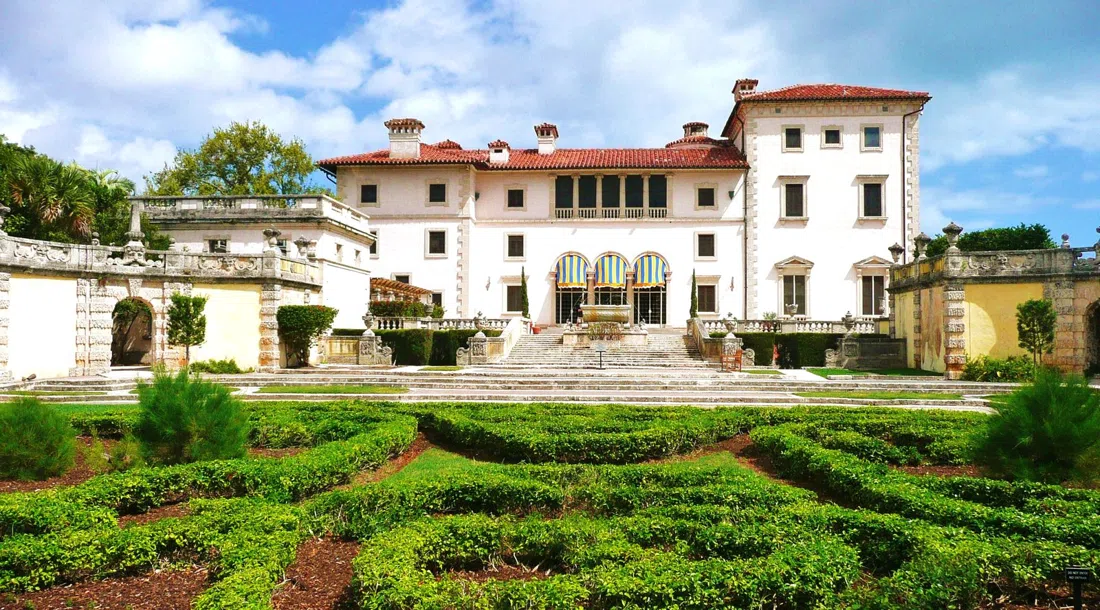
The Grove's marquee sight needs no qualifier: Vizcaya Museum and Gardens (3251 S Miami Ave) is a 34-room Italian Renaissance-style villa completed in 1916 as industrialist James Deering's winter residence, set inside 10 acres of formal gardens that run straight down to Biscayne Bay. It's open daily except Tuesdays, and it rewards an unhurried visit — this is the kind of place where the gardens alone can eat an afternoon.
History runs deeper still at The Barnacle Historic State Park, Miami-Dade's oldest house still standing on its original site, built in 1891 by Ralph Munroe, one of the Grove's actual founders — walking through it is as close as the neighbourhood gets to a time machine.
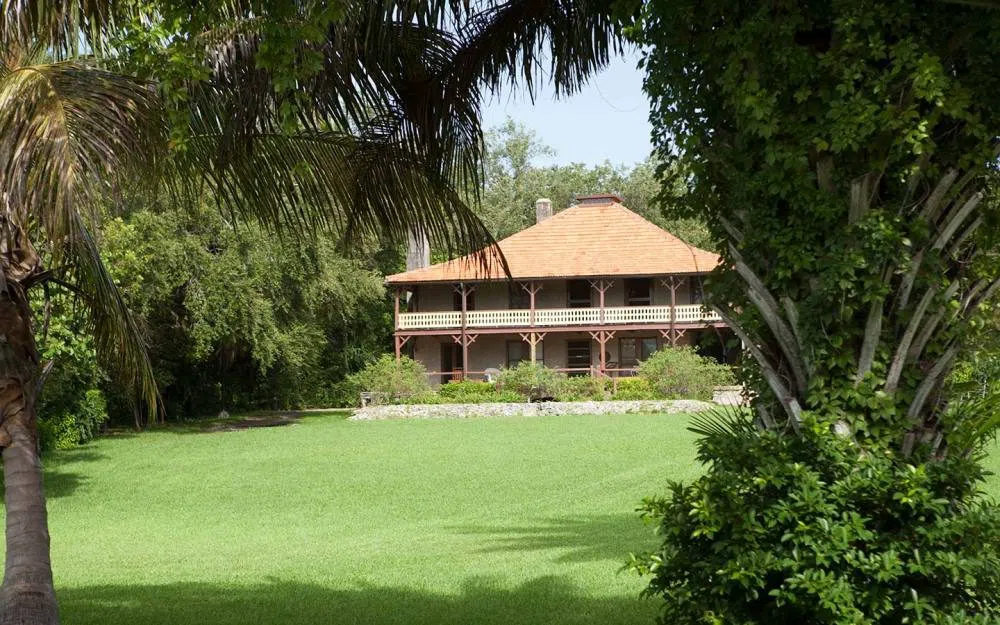
Plant people should make time for The Kampong, an 11-acre collection of rare tropical species assembled at the former home of plant explorer David Fairchild — a quieter, more specialist stop than Vizcaya, but no less remarkable for it. And then there's the water itself: Dinner Key Marina, Florida's largest wet-slip marina, is the launch point for sailing trips and kayak paddles out onto Biscayne Bay, and even if you're not stepping onto a boat, walking the docks at golden hour is a very Grove way to spend an evening.
Where to shop
Shopping in the Grove centres almost entirely on CocoWalk (3015 Grand Ave), an open-air complex that came out of a major renovation with roughly 150,000 square feet of retail, dining and office space and is now close to fully leased. It mixes national names — FP Movement for activewear, Bluemercury for skincare, a two-level Edward's outpost — with the kind of café and restaurant tenants that make it as much a place to sit as to shop.
It's not a fashion pilgrimage the way parts of Miami's Design District have become, but it's genuinely useful, easy to reach on foot from Main Highway, and rarely feels like the mall it technically is — more a covered plaza that happens to have retailers in it than a destination in its own right.
Where to stay in Coconut Grove
The Grove's hotel scene is small, upscale and clustered within a few blocks of Main Highway and CocoWalk, which means almost anywhere you land here puts you within walking distance of the whole neighbourhood. The Ritz-Carlton Coconut Grove leans deliberately into the area's artistic, bohemian identity rather than playing the generic five-star part, and it's a useful signal for the category as a whole: this isn't a neighbourhood of sprawling beachfront resorts, it's one of boutique, design-forward properties that assume you're here for the trees and the restaurants rather than a private stretch of sand. Budget travellers should know upfront that there's little true budget lodging within the neighbourhood itself — the Grove's price point runs mid-range to upscale across the board, matching the Michelin-recommended kitchens down the street.
Getting around
Metrorail's Orange Line runs three stations through the area — Vizcaya, Coconut Grove and Douglas Road — which sounds more convenient than it is in practice: the Coconut Grove station sits near SW 27th Avenue, about a mile from the restaurant strip on Main Highway, so budget a 15-20 minute walk, or a short bus or rideshare hop, to bridge the gap once you're off the platform. From downtown Miami, a rideshare runs roughly 12 minutes door to door, and Miami International Airport is about 20-25 minutes away by car. Once you're actually inside the core — Main Highway, Commodore Plaza, CocoWalk, Peacock Park — everything sits close enough together that a car becomes more trouble than it's worth, and the tree cover makes walking it, even in Miami heat, genuinely pleasant rather than punishing.