On a clear Saturday the Haulover ramp car park fills before most kitchens in the city have opened, and by ten the shallows inside the bay are a loose grid of hulls, bow anchors out, speakers up, water somewhere between knee and chest deep. Miami's weekend social life happens out there rather than behind a rope line, on sand that only exists at certain tides and under rules nobody hands you with the boat keys. The stops below are the ones locals use, with what each costs and what to do when the wind ruins the plan by eleven.
Where a sandbar Saturday actually starts
If you are trailering, the day begins at Bill Bird Marina at Haulover Park (Haulover, on the Intracoastal side of the inlet), and it begins early. The public ramps run 24 hours, which sounds generous until you reach the part that matters on a weekend: the ramp car park closes when it is full on Saturdays, Sundays and holidays, and on a settled day in season that happens long before the morning feels late. Ramp parking is $7 for a car and $20 for a trailer on weekdays, $10 and $30 Friday to Sunday and on holidays. The marina reopened after a $13.8m resiliency rebuild with floating docks and two extra piers, so the launch itself is quicker and less bad-tempered than it used to be. The queue, however, is still the queue.
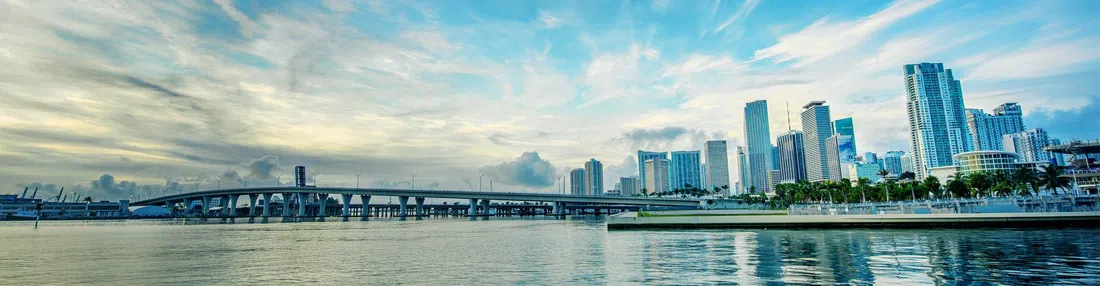
The reason everyone tolerates it is distance. Haulover is the shortest run to Haulover Sandbar of any launch in the city: minutes of idling rather than the long bay transit from the southern ramps, which matters when you have eight people and a melting bag of ice on board. If you are not driving the boat, do the useful thing and get dropped at the dock with the cooler while the driver deals with the trailer. The charter and drift-fishing fleet works out of the same marina, which is worth knowing for a group of six or eight with no boat of their own and no appetite for organising one.
Reading the water before you commit the day
A sandbar gives you shallow water and nothing else. It is excellent in light wind and genuinely unpleasant in anything else, and the difference can arrive as a ten-knot shift halfway through the morning. Boats raft up in standing depth, children drift about on inflatables in the middle of the pack, and the social unit is whoever you tied to. There is no shade, no shelter, no toilet and nowhere to buy ice, so whatever you did not bring, you do not have.
An east or southeast breeze over open shallows means chop, spray and a line of boats rolling against each other's fenders. That is the version visitors remember as "the boat day was fine, I suppose". People who do this every weekend read the forecast the night before and keep a fallback in their pocket: somewhere with land between them and the wind. Two of the stops below exist for exactly that reason, and knowing them is the difference between a good Saturday and a wet one.
Etiquette is unwritten and simple. Come in slowly, drop well clear of the boat you are joining, tie alongside only if you were asked, take your rubbish home, and remember that sound carries absurdly well across flat water.
The cove to run for when the wind kills the sandbar
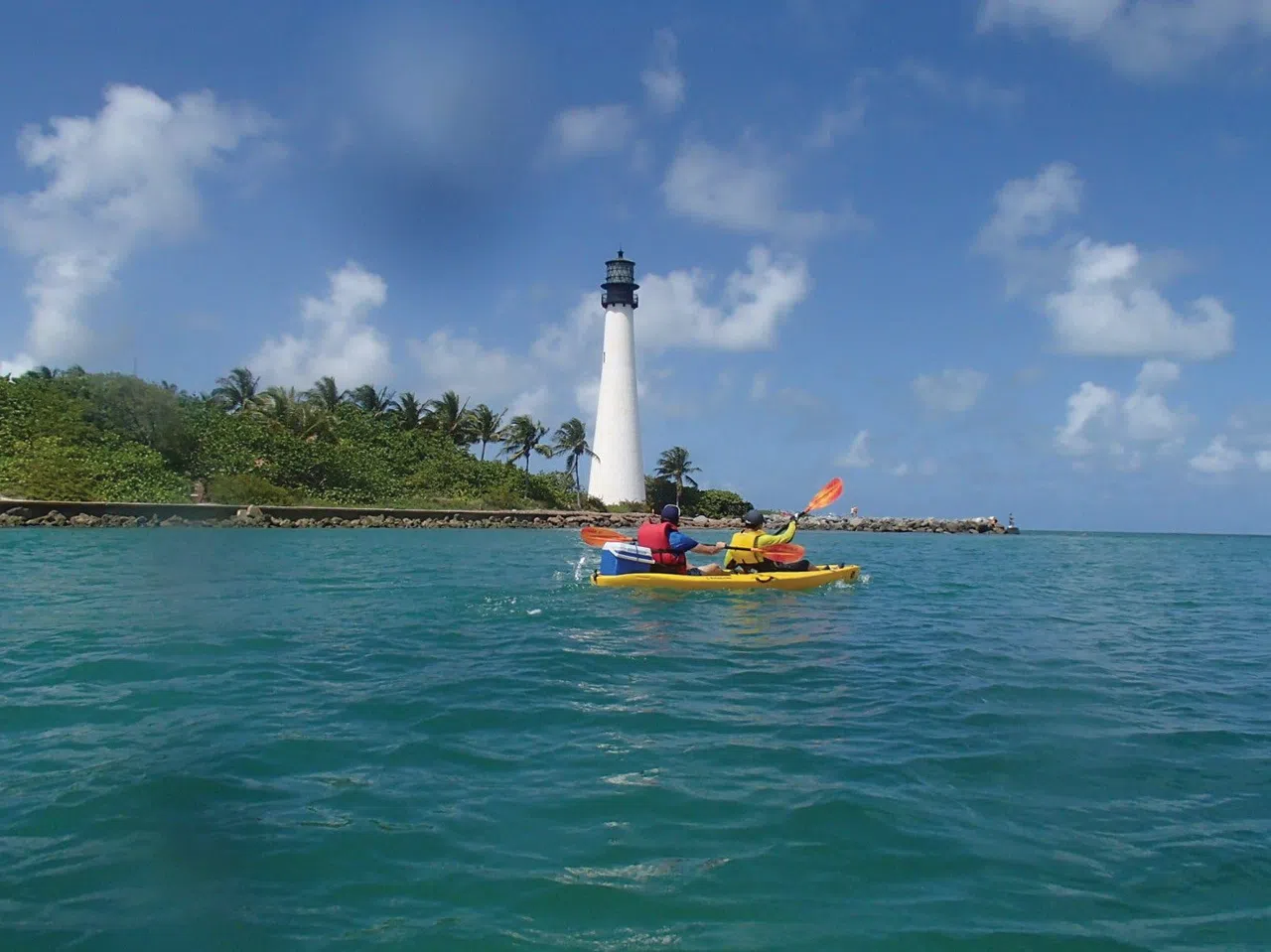
No Name Harbor (Key Biscayne, inside Bill Baggs Cape Florida State Park) is the address worth memorising. It is a protected cove ringed by park land, so it stays flat when every exposed sandbar has turned into a washing machine, and it is the one stop on this list that reliably works on a bad-wind day. Arriving by boat costs an $8 park fee, paid at the honour stations on the seawall; anchoring overnight is $20 per boat per night, and there is a free pump-out.
Be realistic about scale. Raft-ups inside the harbour are capped at two boats together, and there is no mooring against the seawall between 23:00 and 08:00. This is a cove for one or two boats of friends, and if you turn up with five expecting to tie them all into a line, you will be asked to break it up. The Sunday ritual is anchoring in the flat water, swimming off the back, then walking up to lunch.
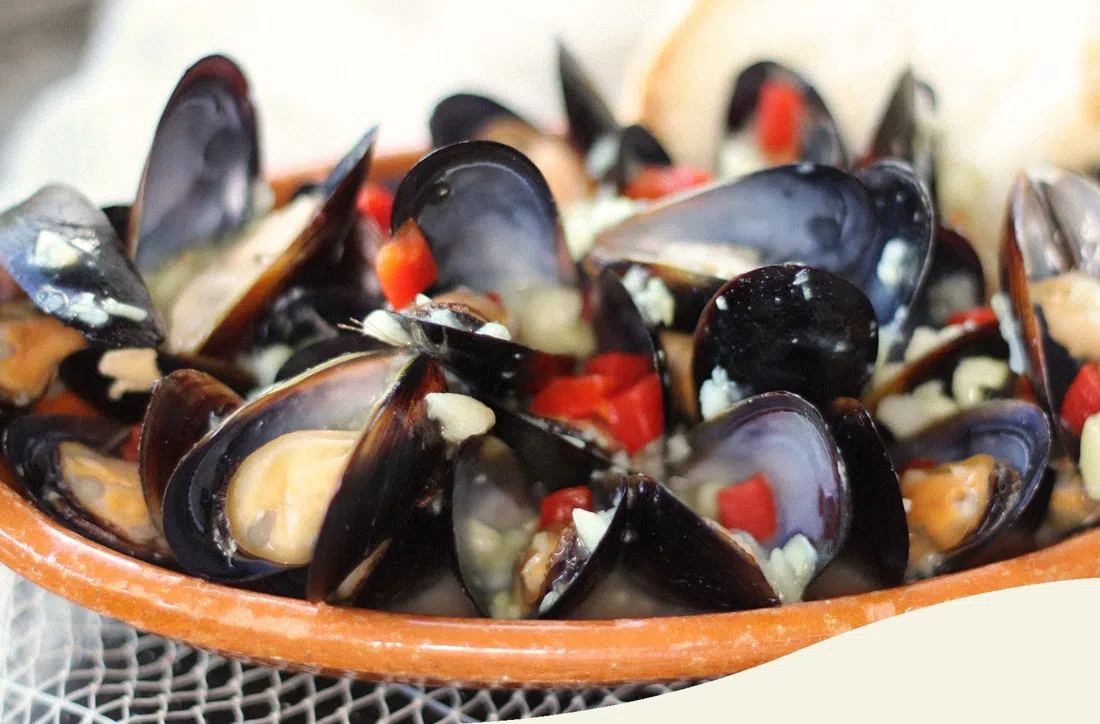
That lunch is Boater's Grill (Key Biscayne, on the harbour inside the park). It started in 1999 as a bait-and-provisions shack for boaters and still cooks like one: Cuban-leaning, unfussy, mains roughly $25 to $45. Nobody minds that you are barefoot, sunburnt and dripping, because that is the entire clientele. It is walk-in friendly, large tables exist, and a Sunday group should call ahead rather than hope. Hours are 11:00 to 20:00 Sunday to Wednesday and until 22:00 Thursday to Saturday, so a late Saturday afternoon anchor still catches dinner.
Six houses on stilts and the rule about going inside
Stiltsville (the flats south of Key Biscayne, inside Biscayne National Park) is the stop that explains the rest of bay culture. Six wooden houses stand on pilings in open water, the survivors of a 1930s squatters' village that once ran to a few dozen structures, and from a boat they look less like buildings than like a mistake the sea forgot to correct. It is the strangest skyline in Florida, and for most people who grew up boating here it is the part of the bay they are sentimental about.
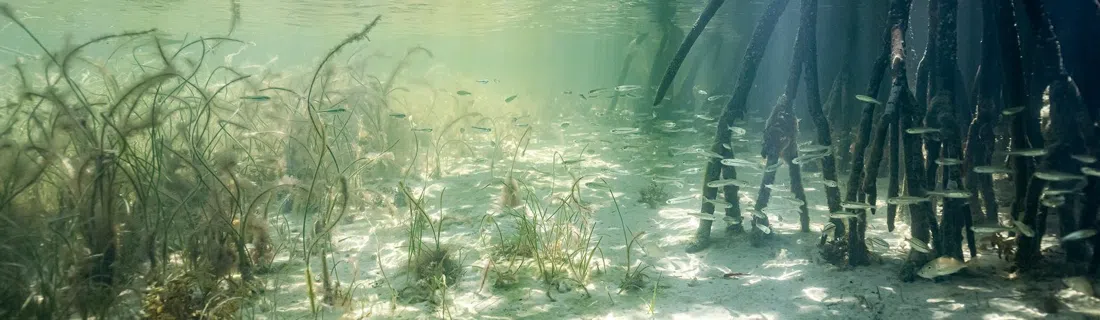
The practical rule is clear. Anchoring nearby and swimming is free and works for any size group. Going inside one of the houses requires a permit arranged through the Stiltsville Trust, which is not a same-day proposition, so plan on the view: a slow circuit, a swim in gin-clear water over sand, photographs that will do more for your week than anything taken on dry land. Guided trips out here start at around $70 per person if you have no boat.
South to the park islands when one day is not enough
An hour south of the busy shallows the bay changes character. Boca Chita Key (Biscayne National Park) is a small island with a cut-in harbour, a picnic lawn and the Mark Honeywell lighthouse, which you climb for a view of the whole bay at once. The overnight dock fee is $25 and includes a campsite; docking and camping fees are waived from 1 May to 30 September. The harbour and lawn genuinely suit a multi-boat group, but slips are first-come, so send one boat ahead on a Saturday morning while the others are still loading. Staying the night is the point: no lights anywhere except the city's glow sitting on the northern horizon.
Elliott Key (Biscayne National Park) is the quieter sibling and the easier one to get into, with a more forgiving harbour entrance than Boca Chita, which matters if you are not confident reading shallow water. The dock fee is $25 Friday to Monday and on federal holidays, camping is $35 per night, and the same 1 May to 30 September fee waiver applies. The campground is open from 2 March to 31 December. Bring everything, including water; this is a national park island, not a resort with a shop you forgot to notice.
The October weekend that is not a family outing
One weekend a year the flats off Elliott Key stop being quiet. The Columbus Day Regatta raft-up lands on the second weekend of October and absorbs hundreds of boats tied together into the largest floating party in the state. People organise their autumn around it and tell stories about it for years. It is also not a family outing. Alcohol, noise and crowding are the entire format, the anchoring is dense enough to make leaving early difficult, and the shallow water means mistakes get expensive. If you want the spectacle without the commitment, go out and look, then run north to a park harbour to sleep.
Doing the bay properly without owning a boat
Most visitors do not have a boat, and the water is still the best day in the city. The Biscayne National Park Institute (departures from Coconut Grove and the Deering Estate) is the official park partner and the only guided route to Stiltsville and Boca Chita with someone aboard who knows what the houses were and why six are left. Scheduled small-group departures run daily, cruises of two to four hours cost $68 to $83 per person, and snorkel and sail trips cost more. Private group bookings are available, which is often better value for six or more than chartering blind.
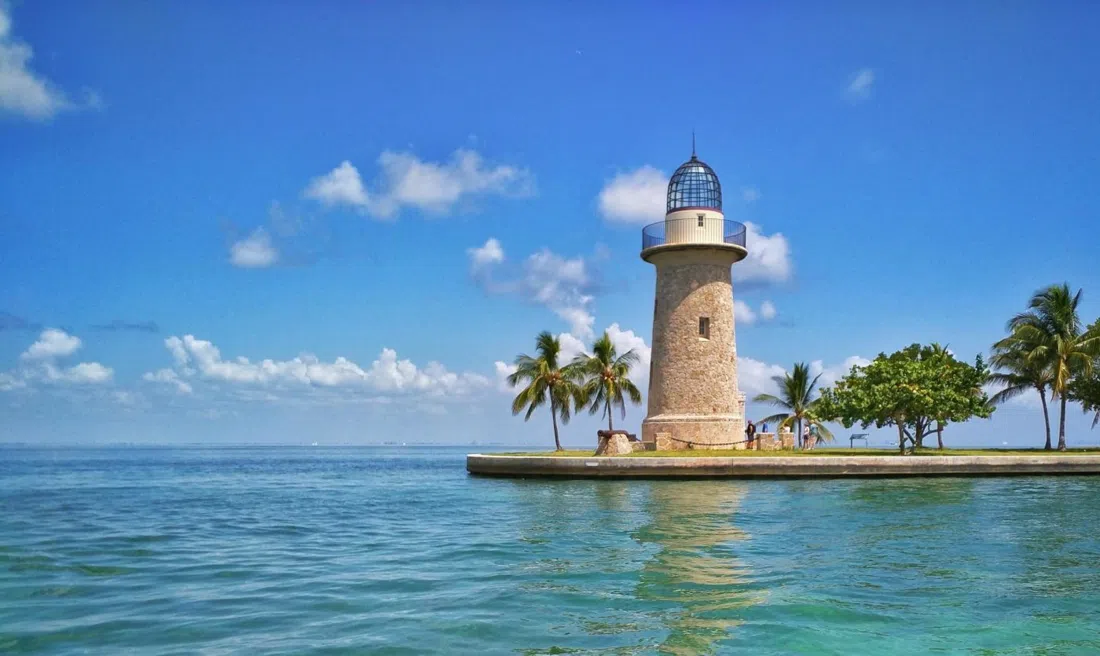
Choose it over a generic boat hire because the guides work to the park's standards around the flats and seagrass, and the revenue goes back into the park. Book ahead for weekends and expect departures to be weather dependent; a cancellation call is the operator doing its job.
Where the day ends in Coconut Grove
Coming off the water hungry and salt-crusted is half the ritual, and the Grove waterfront is built for it. Monty's Raw Bar (Coconut Grove, on the bay at Dinner Key) is the oldest reflex in Grove boating: tie up, climb out in your swim trunks, order shrimp, listen to a band play slightly too loudly. There is dock space for arriving boats, but call the dockmaster on 305-854-7997 in advance rather than circling hopefully; big tables and private-event space are available. Raw bar and sandwiches run roughly $18 to $40. It is open until 22:00, and 23:00 on Friday and Saturday.
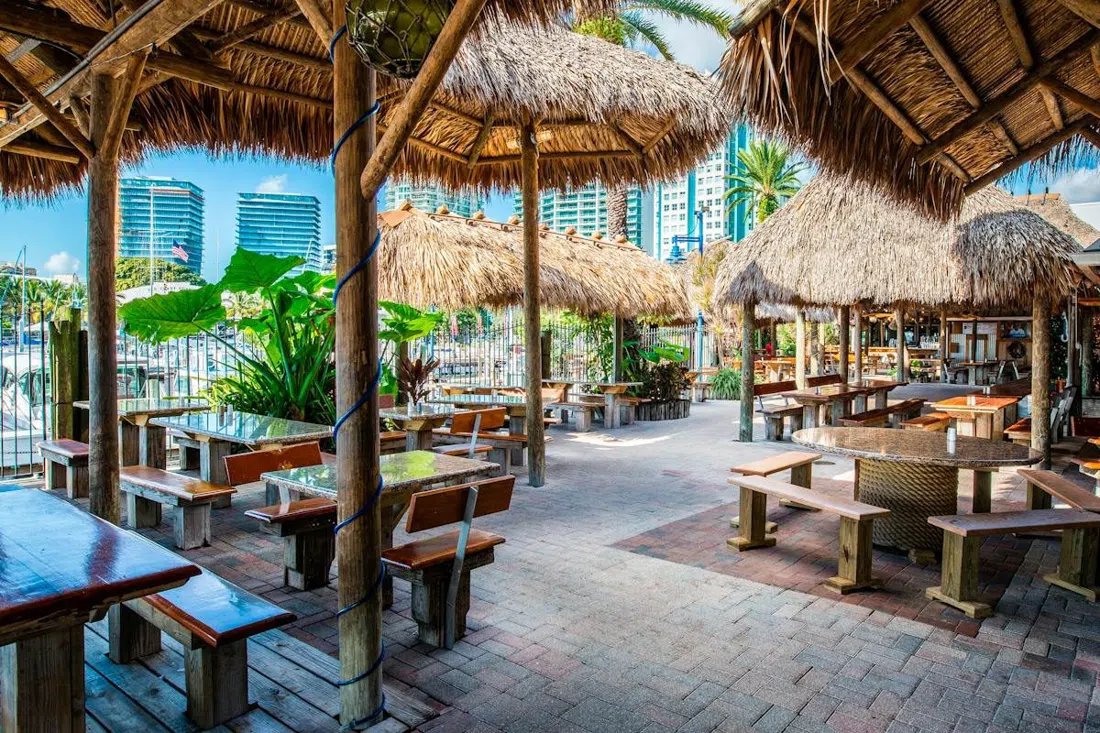
For a group that wants better food without losing the wet-shorts informality, Regatta Grove (Coconut Grove, beside the Dinner Key docks) is the newer answer: an open-air waterfront food hall with 412 seats and capacity close to a thousand, stacking five Michelin-recognised and James Beard-nominated chefs (Jeremy Ford, José Mendín, Jeff McInnis, Kenny Gilbert and Cesar Zapata) into one shed on the bay. Stall plates run roughly $15 to $35 and cocktails $16 to $20. It opens at 16:00 Thursday and Friday and at noon on Saturday and Sunday, with a late licence and a regular events programme. Boats tie up at the adjacent Dinner Key and Grove Harbour docks and walk in; call ahead about dockage. For ten people after a boat day it is the easiest table in the city to fill without a reservation fight, though a weekend evening with live programming will still be busy.

Practical notes for a Saturday on the bay
Timing decides the day. Launch early or do not launch, because the Haulover ramp car park shutting when full is the most common way a planned boat day dies. Light wind is a morning asset, so the useful hours are roughly 09:00 to 15:00, and the afternoon sea breeze is what sends people into No Name Harbor. Check the forecast the night before and have a sheltered fallback chosen before you leave the dock.
Carry small notes. Park fees at No Name Harbor are paid at honour stations, and the park island fees are self-service too. A realistic day for two without a boat is $68 to $83 each for a guided trip plus $40 to $70 for dinner. Trailering a boat with friends is cheaper per head than it looks: $10 to $30 ramp parking, fuel, the $8 arrival-by-boat park fee, and whatever lunch costs. An overnight at a park island at $25 is the best-value bed anywhere near the city; see the Miami hotel search for the nights you want a shower instead.
Haulover is a drive, and so is Key Biscayne. The Grove waterfront is the one part of this you can reach by rideshare in ten minutes from most of the city, which is why it works as the end of the day whether or not you were on a boat. If you are chartering or joining a guided departure, confirm the exact dock the night before: the Grove waterfront has several, and they are not a short walk apart.
One water day, one land day is the right rhythm here; the rest of the city is covered in the Miami guide. And if the wind writes off your Saturday entirely, swap days rather than go anyway. The bay is not worth doing badly.