The marina does its thinking before dawn. By half five the dock lights are still burning, mates are hosing salt off transoms, and half a dozen captains stand on the finger piers with their phones tilted at the same three screens: the bay buoy, the offshore wave model, and a radar loop crawling east off the Everglades. None of them is looking at the ten-day icons on a phone weather app. They are looking at wind direction, the seconds between swells, and what hour the sea breeze is due to turn.
What the captains are actually reading
Miami runs on two weather patterns, and almost every cancellation, rerouting and grumpy refund conversation in the city traces back to one of them.
Roughly November through April, cold fronts sweep down every week or so. The wind clocks around to the north, and a north wind blowing against the north-running Gulf Stream stacks the water into short, steep swell with barely any gap between the faces. Four or five miles offshore it stops being fun and starts being work. The bay behind the barrier islands can be perfectly pleasant on that same morning. So when a fishing trip is scrubbed while a sunset cruise sails from the next dock over, nobody is lying to you. They are on different water.
May through October reverses it. Mornings are glassy and the entire fleet wants the eight o'clock slot, because by two or three in the afternoon the heat has built thunderstorms inland and they drift east over the bay on the sea breeze. Lightning is the one variable with no workaround: no amount of beam, hull size or local knowledge beats it. Hurricane season officially runs 1 June to 30 November, and a named system anywhere in the basin triggers reschedule clauses days before there is anything to see from shore.
The everyday nuisance sits between those two extremes: easterly trades at 15 to 20 knots. Not dangerous, just relentless chop that turns a two-hour cruise into a two-hour beating and a fishing trip into a seasickness seminar. If a captain tells you it is blowing twenty out of the east, they are telling you the trip is legal and unpleasant. That is the conversation worth having before you pay, not after.
The docks that put a number on it
Most weather policies are written to protect the operator. A handful in Miami are written so a customer can actually use them.
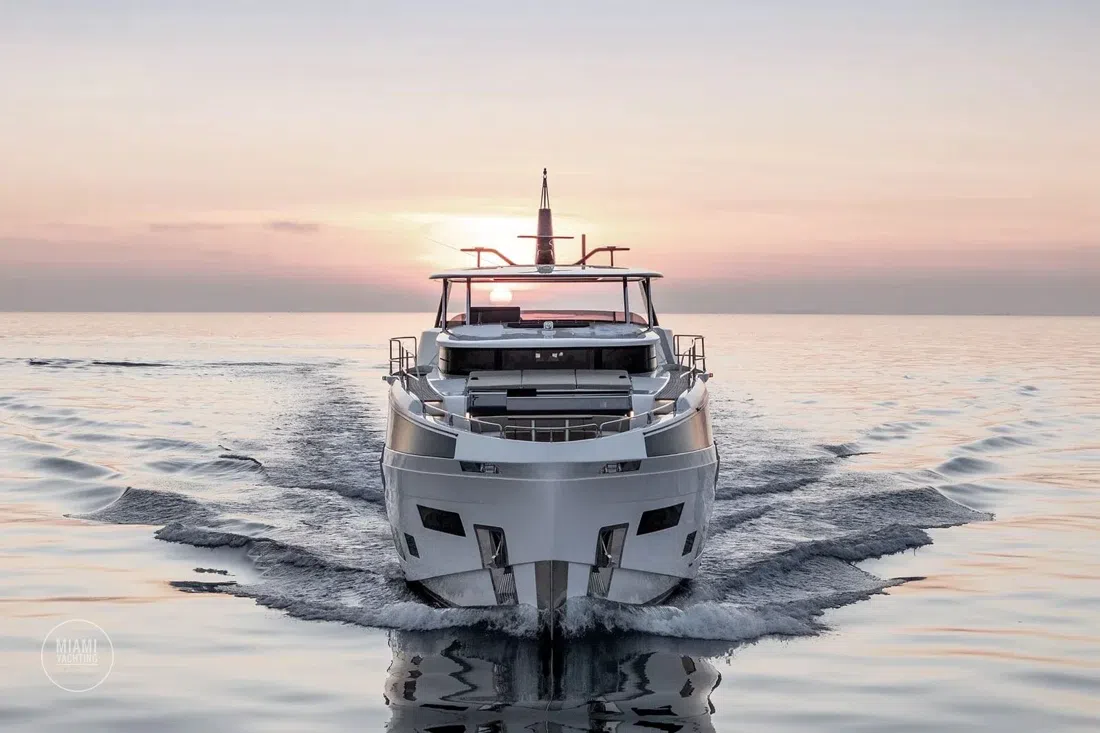
Miami Yachting Company works the Downtown and Miami Beach marinas and publishes its threshold in plain figures: gusts over 30mph, swells beyond three feet, or a named storm, any one of which qualifies you to reschedule. That converts a judgement call into a number you can check yourself on the morning. Day boats start at $700, 40 to 80ft yachts from $1,250, superyachts from $3,200. The small day boats carry six guests and the larger vessels up to 140, subject to Coast Guard limits. Corporate and large-group work is a core line rather than a favour.
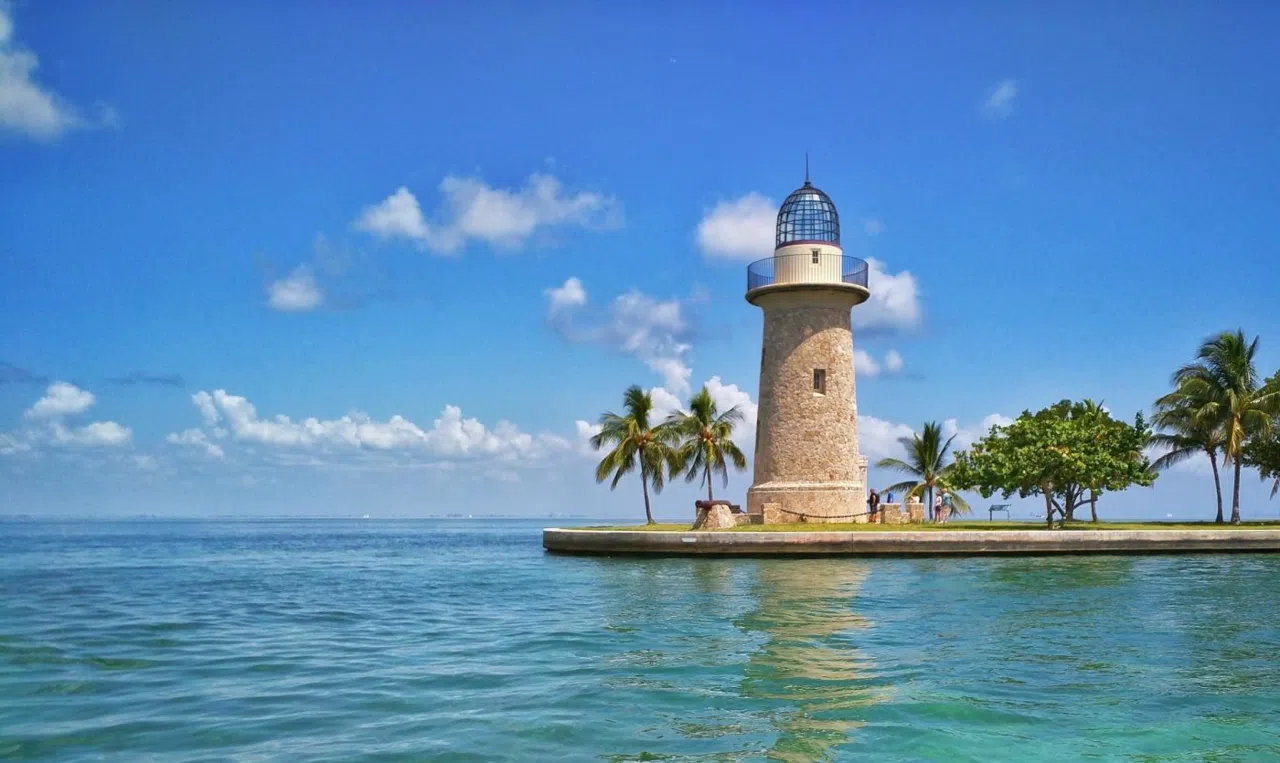
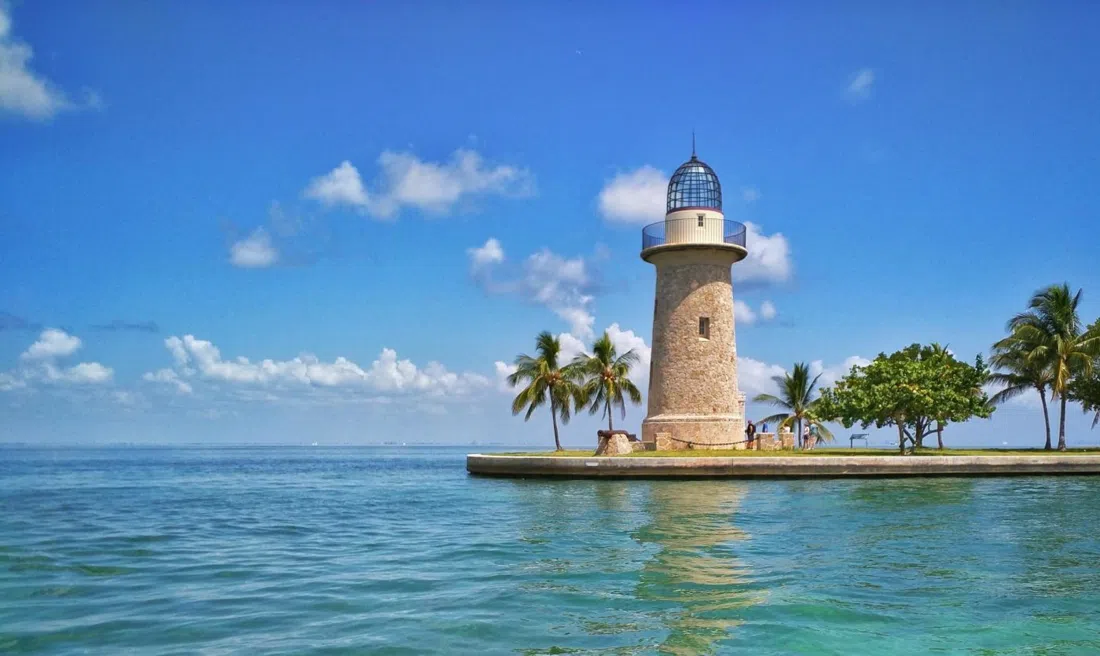
Biscayne National Park Institute sails from Convoy Point, the park's mainland gateway well south of downtown. It is the official park partner and the most honest operator on the bay about turning back. Bookings are tied to a published weather policy instead of a refund argument, which changes the tone of the whole exchange. Sailing trips cap at six passengers, so this is couples-and-small-parties territory rather than a celebration boat; the Stiltsville run goes Thursday to Sunday on a larger vessel, and private group bookings are by arrangement. An evening sail is $68, and full days combining sailing, paddling and snorkelling start at $209.
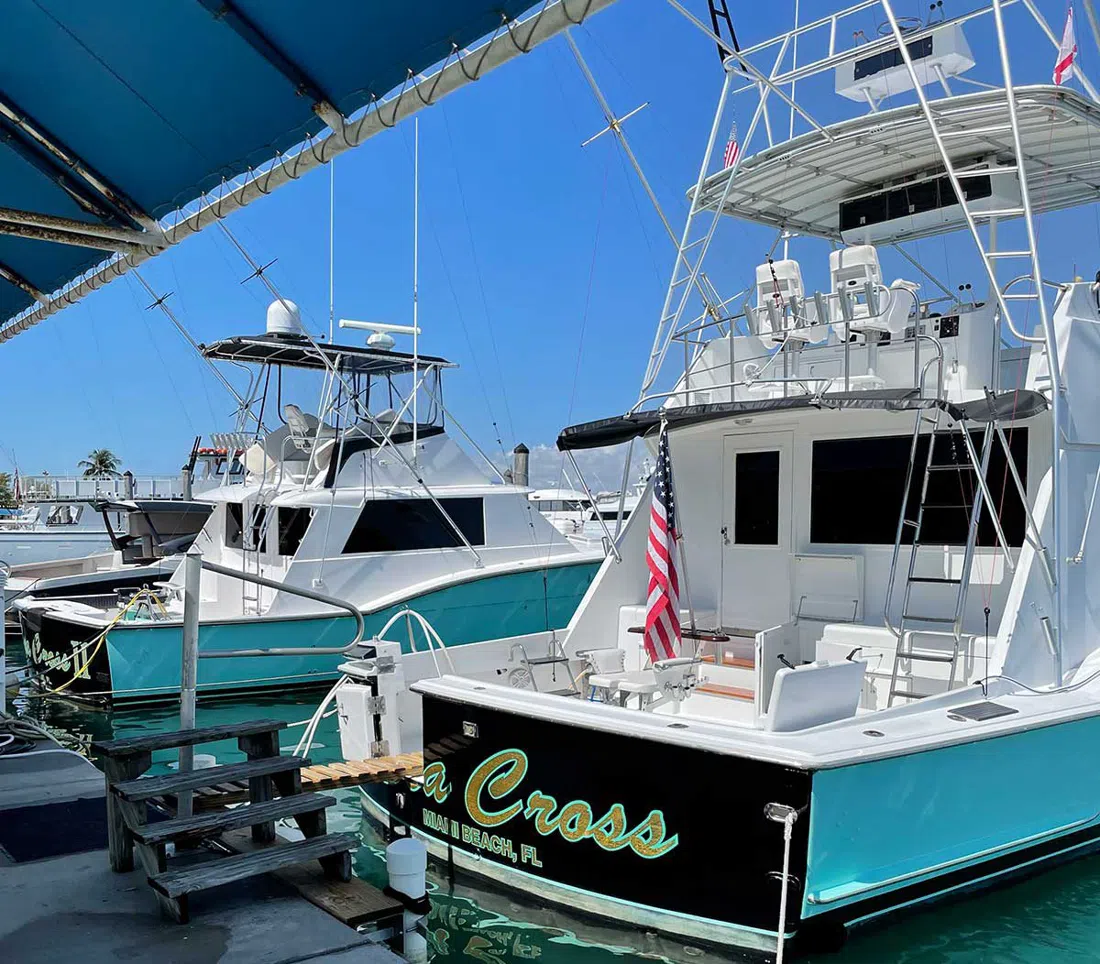
Sea Cross Deep Sea Fishing Miami runs out of Miami Beach Marina and takes private charters only, no shared trips, six passengers per boat, on a half day of four hours, three-quarters at six, or a full eight. Prices are quoted, and severe-weather cancellations carry no fee. Captain Rafael Mayans keeps a backcountry bay boat alongside the offshore pair: when the Stream is unfishable, the trip moves inside instead of evaporating. Multi-boat bookings for corporate groups and Bahamas runs are on the menu too.
The short trips that still sail
Duration is its own kind of hedge. A 45-minute window threads between squalls that would swallow a four-hour charter whole, which is why the shortest trips on the bay have the highest sail rate in the city.
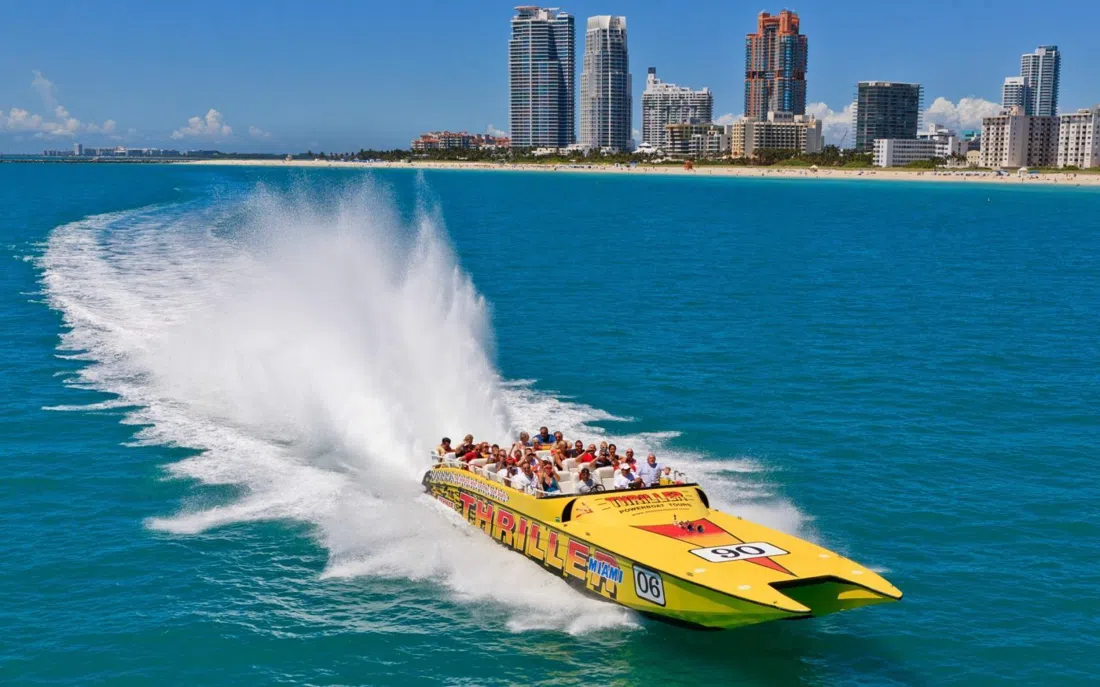
Thriller Miami Speedboat Adventures boards at Bayside in Downtown, has been running since 2006, and is the cheapest honest way to feel what Biscayne Bay's chop is actually doing: $35 to $40 per person for 45 minutes, ages three and up, walk-up friendly, with whole-boat bookings for parties. It sails in conditions that cancel longer trips, and it is deliberately a wet, loud ride rather than a scenic drift. Do not book it expecting a cruise.
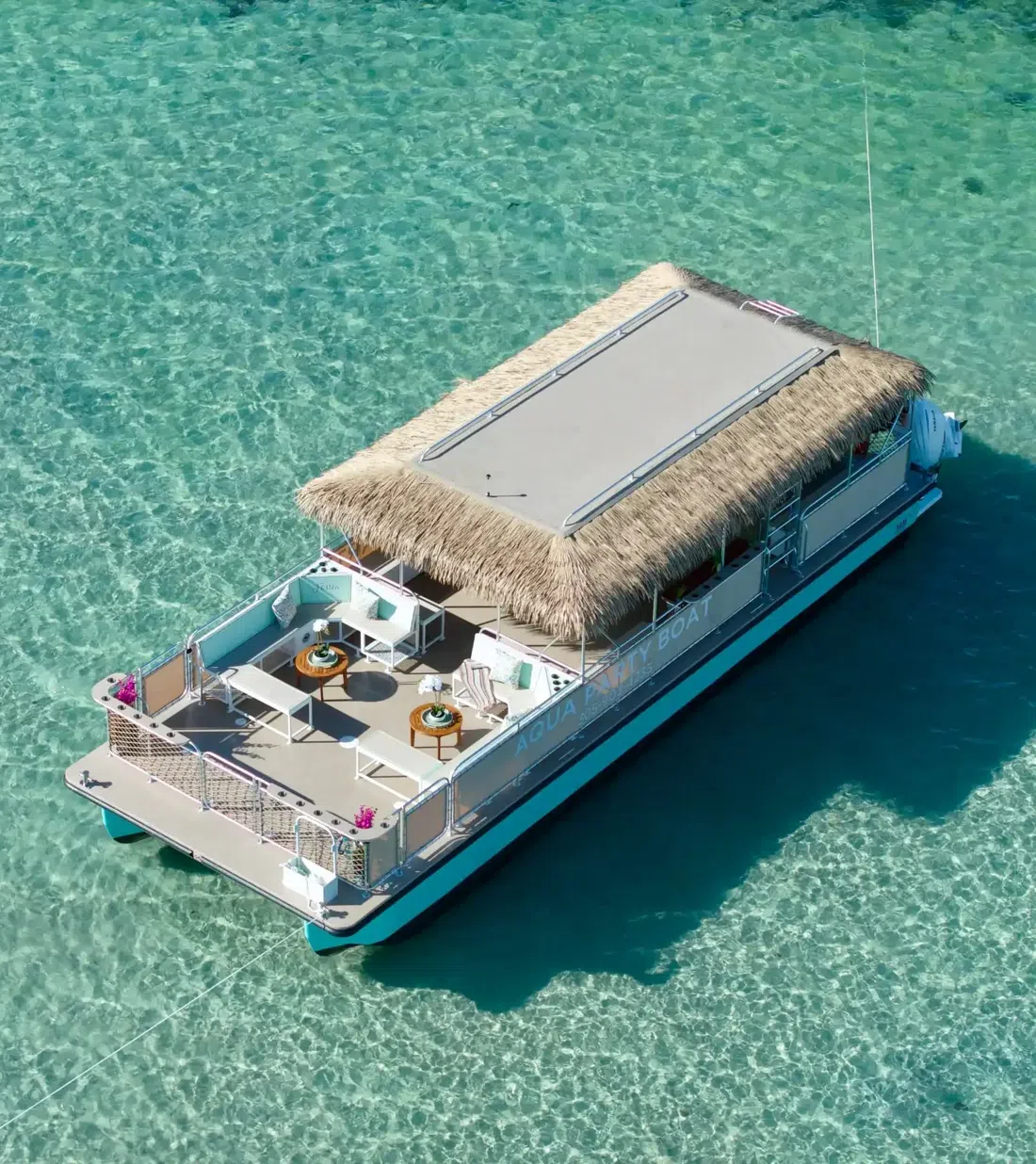
Aqua Party Boat at Miami Beach Marina is built for groups from the ground up: whole-boat private charters for 13 to 49 guests from $649 with a two-hour minimum, captain and mate included, BYOB. Shared cruises start at $49 per person, and 75,000-plus guests since 2013 have kept the pricing model honest, so the quote you get is the bill you pay, which in this corner of the industry is genuinely unusual. Be clear-eyed about the shared option: it puts you on a catamaran with strangers in party mode, not a quiet sunset for two.
Waterline and beam are the hedge against a forecast
When the wind gets up, hull dimensions do more for a booking than the captain's optimism does.
Biscayne Lady Yacht Charters at Bayside, Downtown, is the clearest demonstration. The twin hulls are the entire point: the boat stays level on a bay that makes monohulls of similar size unusable, which is why it works as a venue rather than a ride. It handles weddings, quinces and corporate events up to 400 passengers with catering and event planning in-house, quoted per event and running into four figures upward. It is the charter arm of Island Queen Cruises, so treat it as one operator rather than two when you are comparing quotes.

Miami Boat Charters has worked the Downtown and Miami Beach docks since 2000 and runs boats from 43ft to 220ft, fully crewed only, no bareboat. Day charters take up to 13 guests from $1,999 all-in, term charters up to 10, and party boats up to 320 from $4,950. Its useful habit is moving a group onto a bigger, steadier hull when the forecast sours instead of cancelling outright. Ask for that explicitly at the deposit stage rather than hoping for it on the day.

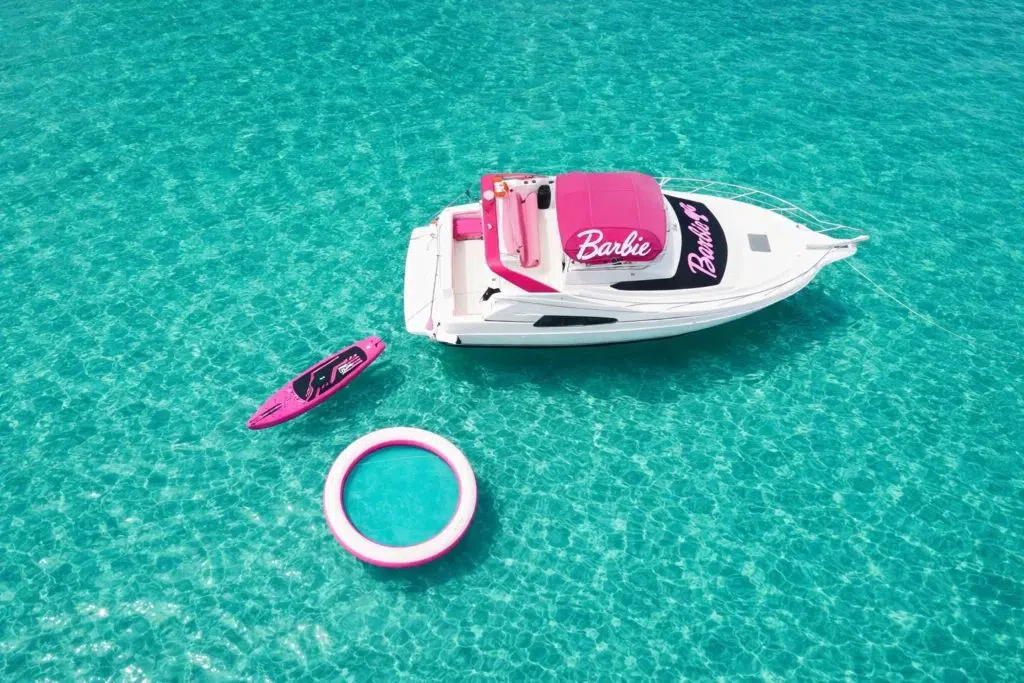
Feeling Yachty, Miami Beach Marina, established 2008, sits at the celebration end of the fleet: mid-size yachts for 12 to 13 guests from roughly $1,700 for four hours, larger hulls for full private events, DJs and catering bolted on, and holiday dates priced higher. Quotes include the fees, and the review base is large. One caveat matters more here than anywhere else on this list. Ask which specific hull you are getting before you pay, because on a breezy afternoon the answer is the difference between a party and forty people holding a rail.
When the Stream is off the fish move inside
Spellbound (Reel Adventure Charters) at Miami Beach Marina is licensed for 24 passengers where most Miami charters cap at six, which makes it the default answer for a group fishing trip and, not coincidentally, a boat that still fishes on days that send the small centre consoles home. Half a day of four hours is $850, three-quarters at 5.5 hours is $1,275, and a full eight-hour day is $1,700. Captain Manny has spent 30-plus years kitefishing sailfish off this coast, and corporate and event trips run year-round.
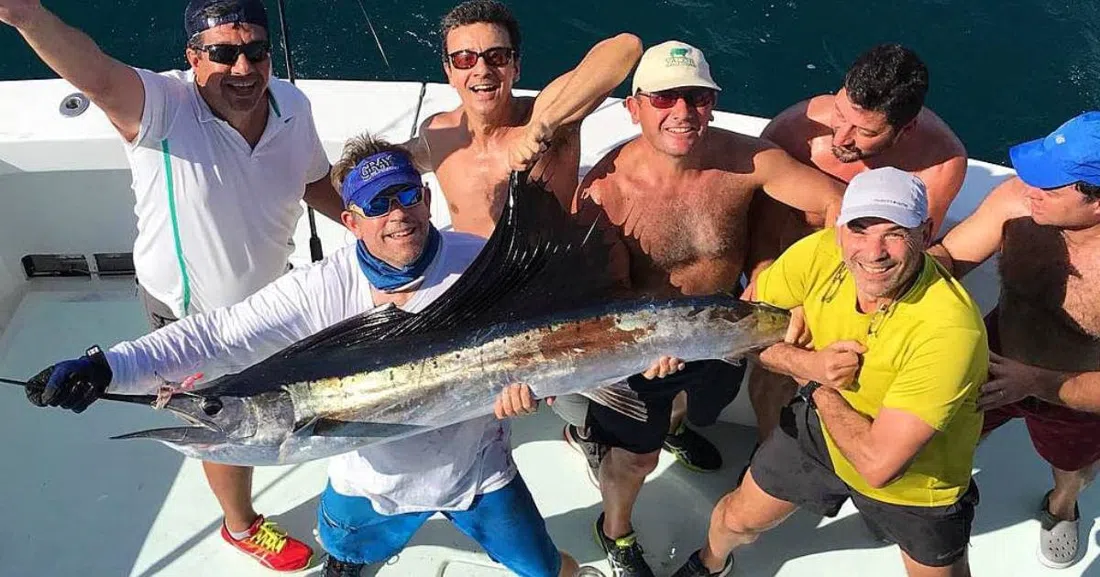
Go Hard Fishing (Capt. Abie Raymond) out of Miami Beach is the opposite scale and the opposite philosophy: up to four anglers on one boat, roughly $600 to $1,000 per boat depending on trip length, small parties and families rather than big groups. Raymond trained for a decade under the late Miami legend Bouncer Smith and puts the weather logic more plainly than anyone. If the high seas are the problem, he has calm-water options in the bay, the inlet and the canals, so in practice only lightning actually kills the day. A small-boat captain who will fish you inside is worth more in February than a big boat that only knows offshore.
Divers read the water not the sky
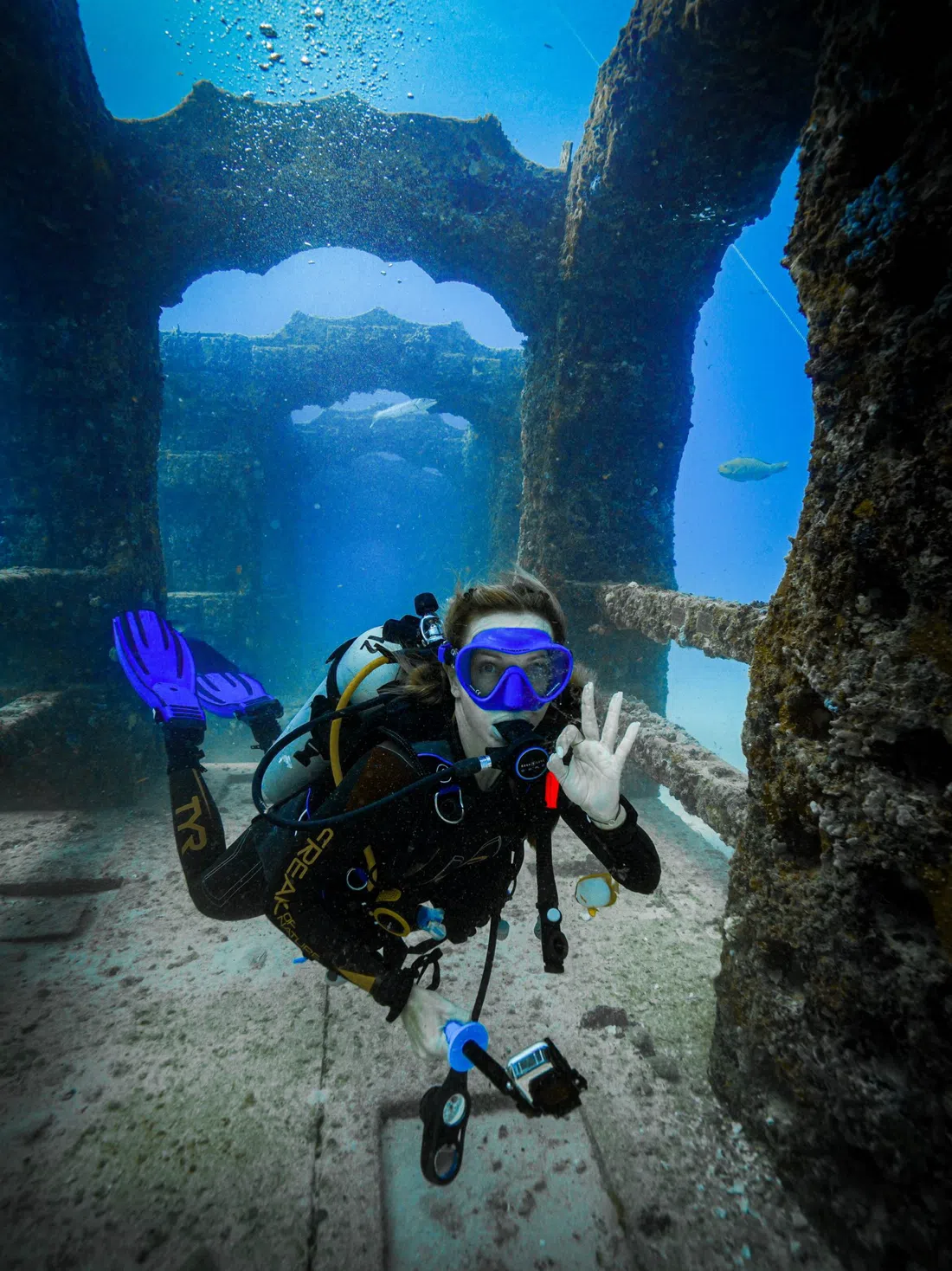
Diver's Paradise Miami at Crandon Marina, out on the key, runs the sharpest version of this whole story, because for a dive boat the question is not whether you can go but where the water is clear. Sixty wrecks and thirty reefs sit off this coast, and visibility follows recent wind direction and swell. The crew picks sites accordingly, so daily scheduled two-site trips can look identical on paper and be completely different dives. Trips are open to all levels, private whole-boat charters are on quote, day trips are mid-range per person, and the shop teaches PADI 5-star courses. Ask which two sites they chose that morning and why; a good answer tells you how the operation works.
The most cautious dock on the bay
Shake-A-Leg Miami in Coconut Grove is a nonprofit accessible sailing centre and the one dock in the city where a wheelchair user gets the tiller rather than a seat. Group charters take up to 40 people across the keelboat fleet, there is a 50ft pontoon for bay tours, and team-building and community days are actively welcomed. Rates are low and nonprofit, with scholarships available on the fee-paying programmes. The safety culture that comes from teaching disabled sailors also makes its weather calls the most conservative on Biscayne Bay. Read that as a feature: if Shake-A-Leg is not going out, the rest of the fleet is making a judgement call, not a safe bet.

How to book against a forecast
Put the boat early in your stay rather than on the last morning. A trip booked for day two has three chances to happen; a trip booked for the day you fly out has one. From May to October, take the morning slot without negotiating, because the afternoon storms arrive on schedule.
Ask three questions before the deposit clears. What is the written weather policy, and can you see it. What time on the day is the go or no-go decision made. And if the wind is up, is there a smaller boat, an inside route, or a larger hull available instead of a cancellation. Operators who answer all three quickly have had the conversation a thousand times. Operators who get vague are telling you which way the refund argument will go.
Finally, do not lean on a captain who is hesitating. The fleet's reputation runs on judgement, and the ones worth booking will take a reschedule over a bad morning every time. Base yourself within a short ride of your dock, and the Miami hotel search is the fastest way to line that up. See the Miami guide for what to do with a day the bay takes away from you.
Getting there, paying and what it costs
Marinas are car and ride-hail territory. The free downtown Metromover puts you within walking distance of the Bayside departures; everything on the beach side means a causeway crossing, so allow 30 to 45 minutes in traffic and more at rush hour. Crandon and Convoy Point both need a car or a ride booked in both directions. Arrive 30 minutes before departure, because boats leave on time and will not wait, and expect paid marina parking that fills on weekends.
Cards cover the booking and the bar everywhere. Carry cash for the crew: 15 to 20 percent handed over at the dock is standard and it goes to the mate who spent the morning rigging your lines. On BYOB boats, buy drinks and ice ashore before you board; nobody is stopping en route.
December to April is cool, dry and breezy, with sunsets around half five. June to October is hot, with glassy mornings, afternoon storms and sunsets closer to eight. Budget from the bottom up: $35 to $40 for the speedboat blast, $49 for a shared party cruise, $68 for an evening sail, $209 for a full day in the national park, $600 to $1,000 for a small inshore fishing boat, $700 for a day boat, $850 for a half day on a 24-passenger fishing hull, $1,250 for a mid-size yacht, around $1,700 for four hours of party charter or a full day of group fishing, $1,999 all-in for a crewed day charter, $3,200 and up for a superyacht, $4,950 for a large party boat, and four figures upward for an event hull. Book the weather policy as carefully as you book the boat.