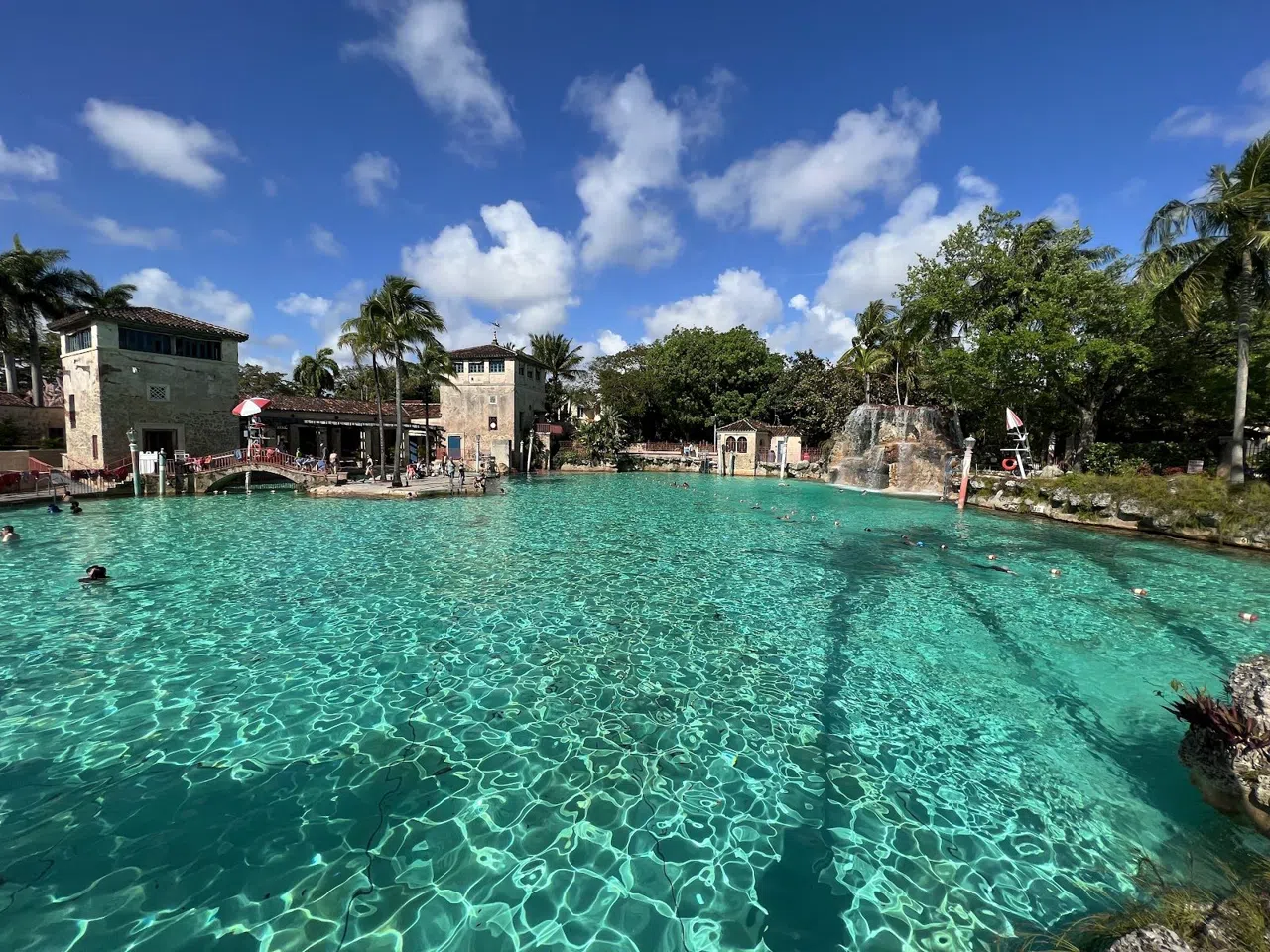

In 1923, a spent coral rock quarry on the edge of Miami was flooded, terraced with cascades and a Venetian-style watchtower, and reopened as a public swimming pool. That single act of theatre set the tone for everything the developer George Merrick built around it: an entire planned suburb rendered in the language of Mediterranean Revival, from castellated water towers disguised as fortresses to a hotel campanile you can still pick out from the causeway. A century later, Coral Gables remains the one place in the United States where you can walk that fantasy start to finish, in an afternoon, without ever leaving the sidewalk.
The Pool That Started It All
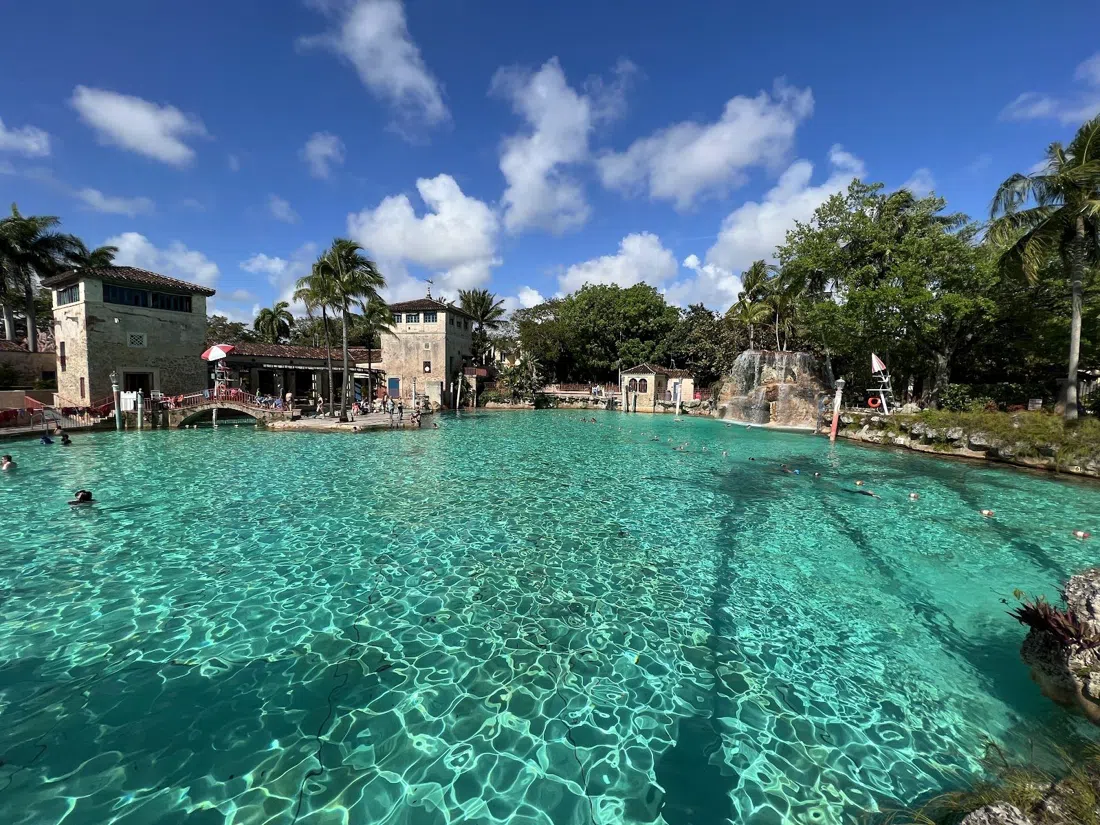
The Venetian Pool (Coral Gables) is the reason the rest of this itinerary exists. Architects Denman Fink and Phineas Paist took a coral rock quarry left over from building the neighborhood's houses and turned it, in 1923, into a fantasy of grottoes, waterfalls, loggias and a lookout tower — it remains the only historic swimming pool on the National Register of Historic Places. It still functions as a working municipal pool, spring-fed and drained on a rotating cycle rather than chlorinated in the ordinary way, which is part of why it photographs like nothing else in Florida. Adult admission runs roughly $18–23 depending on Coral Gables residency, and school groups, field trips and organizations are welcomed with advance booking at a reduced group rate around $8 per person, with free life jackets provided for younger swimmers. The catch: it's closed Mondays year-round and typically shuts for maintenance in December and January, so check the day before rather than showing up cold. Go early on a weekday if you actually want to swim rather than queue.
Merrick's Civic Blueprint
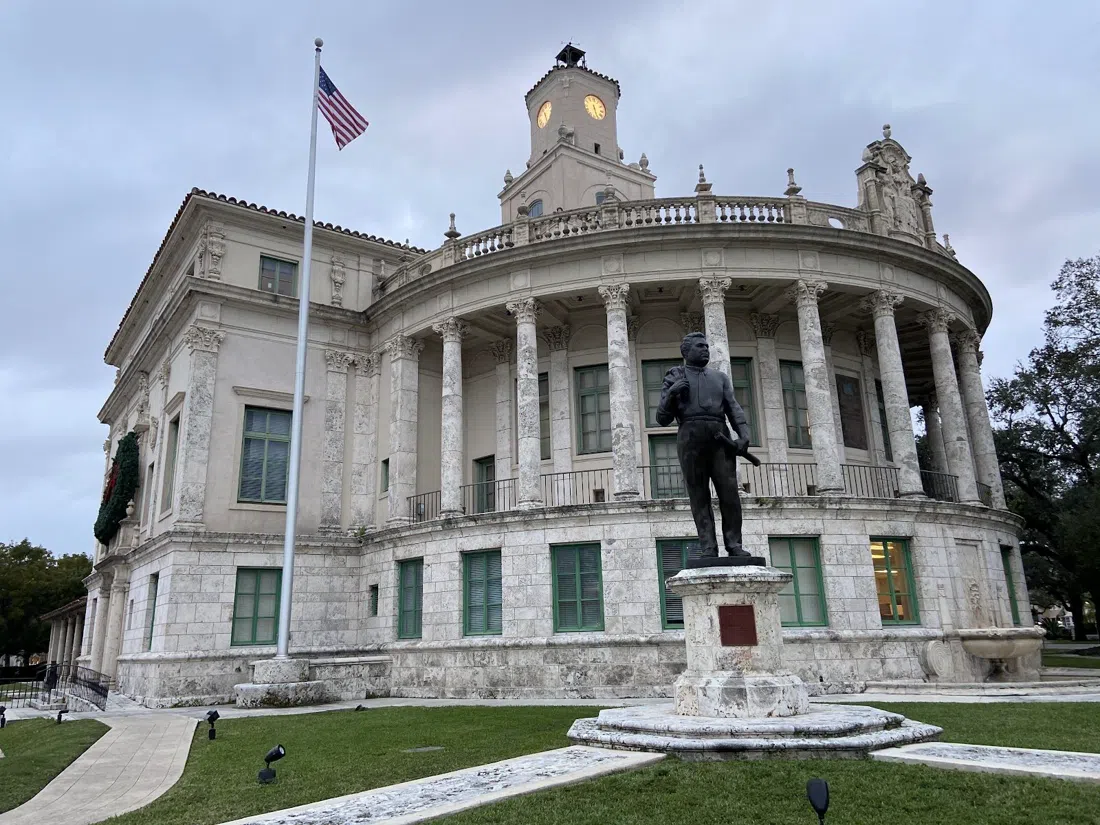
A short walk from the pool, Coral Gables City Hall is the 1920s civic centerpiece of the whole plan — a coral-rock rotunda with a ceiling mural that's been a postcard image of the city for decades. The exterior and plaza are free and open to any group size, but the interior is scheduled to close for a full restoration starting in the third quarter of 2026, a roughly two-year project. If you're planning around the mural, confirm the closure timeline before you build a stop around it — the facade and plaza still work as a photo stop regardless.
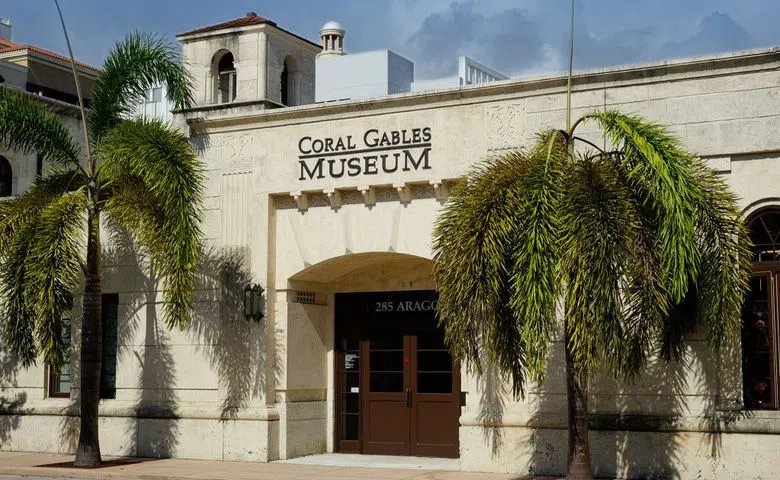
For the story behind the buildings, the Coral Gables Museum, also downtown, is the right first stop of the day rather than an afterthought. It's housed in the city's original coral-rock civic building, and its permanent exhibits lay out Merrick's master plan in a way that makes everything else you'll see click into place. Admission is $15 for adults, $10 for students and seniors, $8 for kids 7–12, and free for children 6 and under; groups can book a guided tour of the exhibits or a city walking tour by calling 305.603.8067, and the museum also runs public Saturday morning walking tours and a monthly bike tour. It's closed Mondays, same as the pool, so plan the two together on a Tuesday-through-Sunday visit.
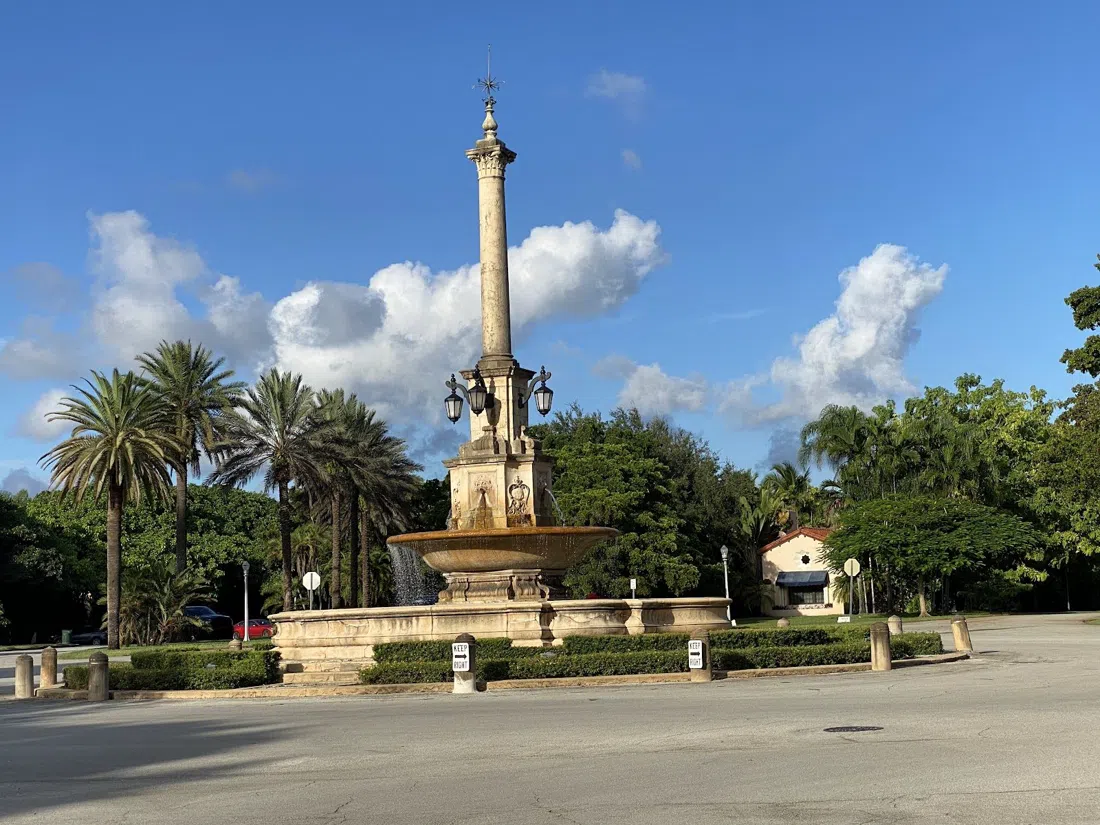
Two minutes further on, the De Soto Plaza & Fountain is a Denman Fink–designed traffic circle turned monument — one of several grand plazas Merrick used to punctuate his boulevards, and an easy free detour between the pool and the Biltmore rather than a destination in its own right. Further west, the Douglas Entrance, also known as La Puerta del Sol, is one of only four gateways actually completed of the eight Merrick originally planned to announce his fantasy city at its edges. The plaza and exterior are free to view and photograph for any group size, and it's still used to frame weddings today, but the interior ballroom is private event space — treat it as an exterior stop, not a walk-in.
The Biltmore and Its Neighbors
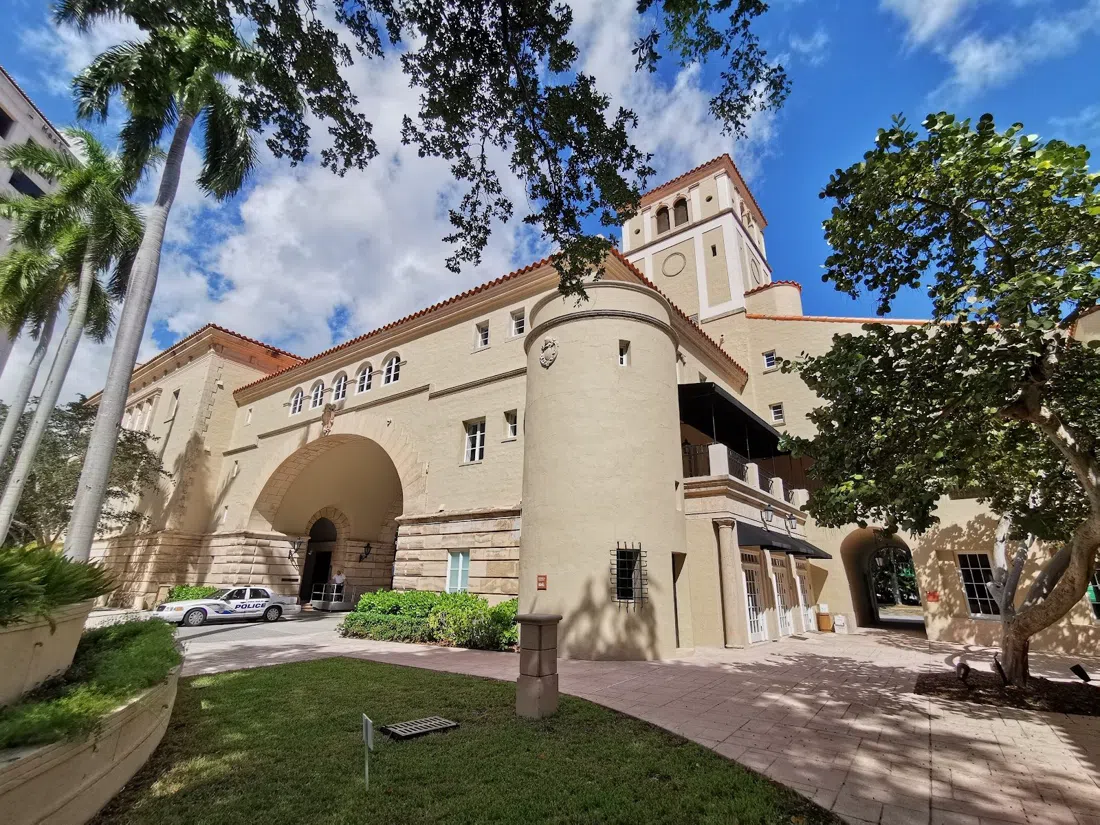
No building carries the Mediterranean Revival ambition further than the Biltmore Hotel Coral Gables, whose tower is visible for miles and is, honestly, the single clearest expression of what Merrick was going for. The grounds and exterior are free to walk, and the Dade Heritage Trust runs free guided tours every Sunday at 2pm, plus free grounds tours on other days — genuinely one of the better free things to do in Miami if the timing lines up. It's also a serious working hotel and event venue, with 23 event spaces, three ballrooms and capacity for up to 1,000 guests, so rooms start from roughly $400 a night and up; this is a look-and-photograph stop for most visitors, a splurge stay for a few.
A few blocks away, the Coral Gables Congregational United Church of Christ is Merrick's tribute to his own minister father and the first public building completed in the city, in 1925 — designed by the same architects behind the Biltmore, which shows in the details if you look for it. The exterior and courtyard welcome any group size for free, but it's an active congregation, so interior visits need to be arranged by appointment rather than dropped in on.

Miracle Mile and Giralda Plaza
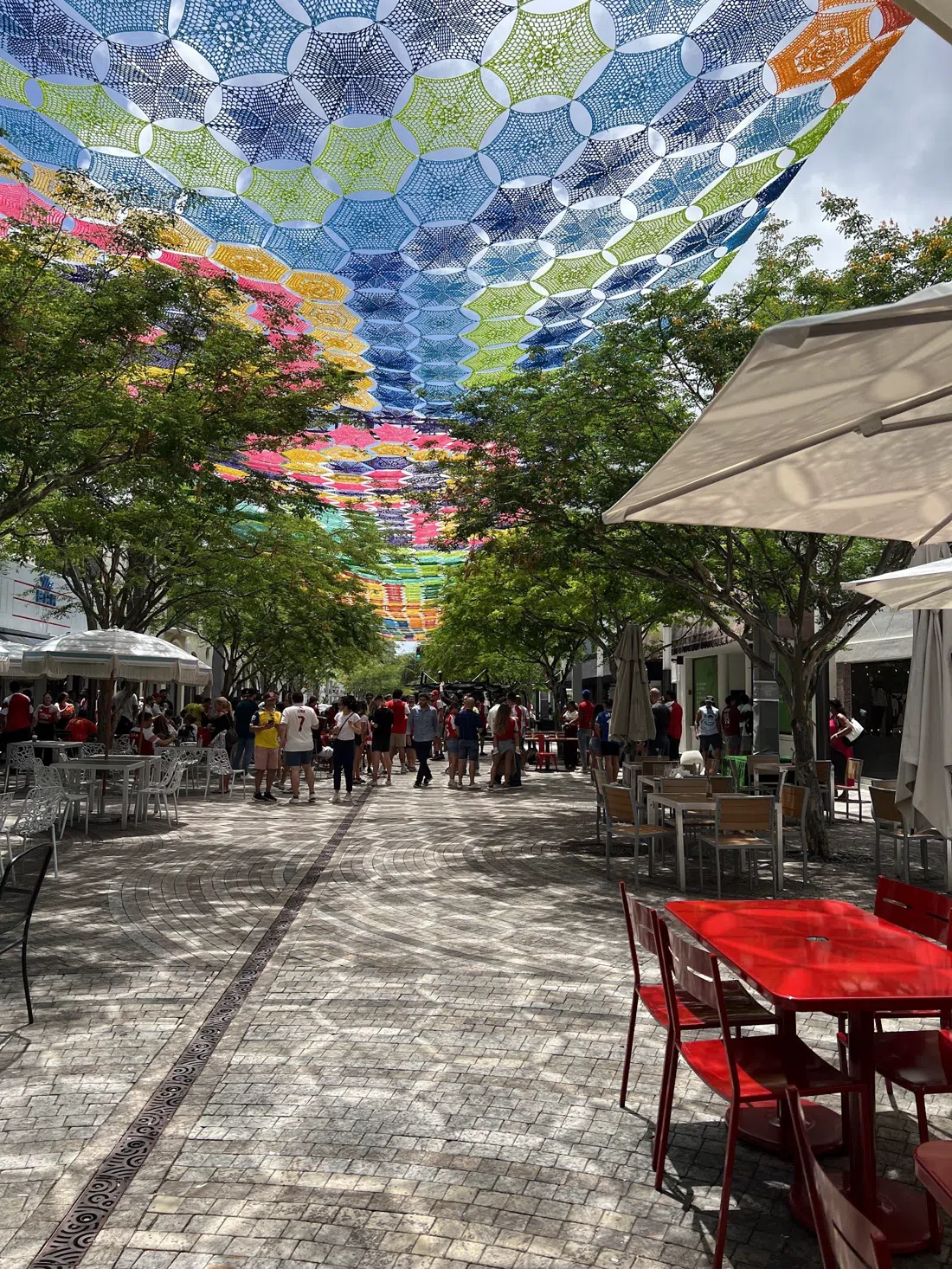
Everything above connects on foot along Miracle Mile & Giralda Plaza, the pedestrianized commercial spine of Merrick's original plan — pastel storefronts, café tables spilling onto a plaza that's been closed to cars, and the closest thing Coral Gables has to a town square. It's free to stroll and works for any group size, though large parties should reserve ahead at restaurants along here rather than expect a table to open up; dining runs roughly $$–$$$ depending on where you sit down.
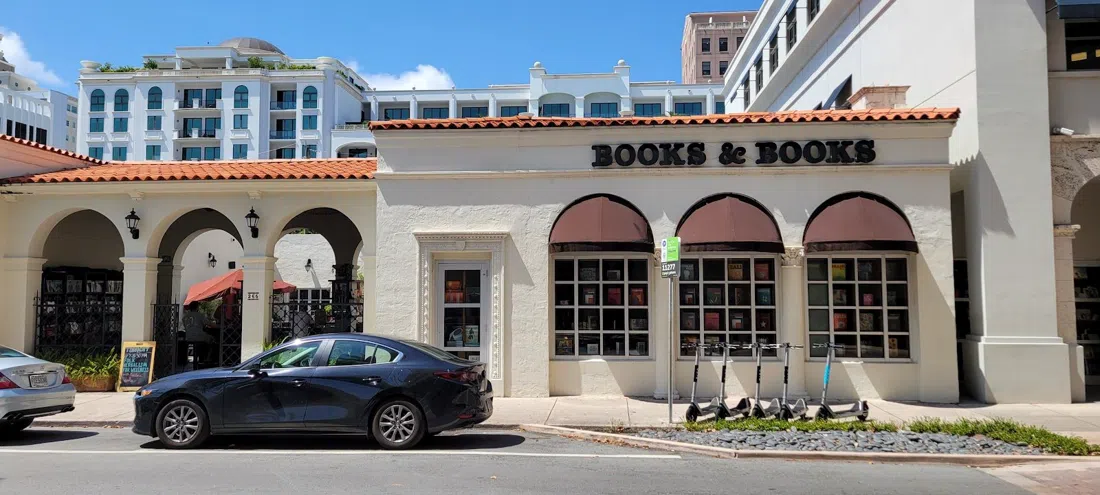
Halfway along it, Books & Books Coral Gables is worth the stop even if you're not buying anything — it's a working piece of the 1920s streetscape you can actually sit inside, and the flagship store of Miami's most-loved independent bookseller. Entry is free, casual browsing is fine for any group size, cafe items run about $5–15, and the store can arrange author events or private group visits if you're organizing something more formal.
Quieter Corners
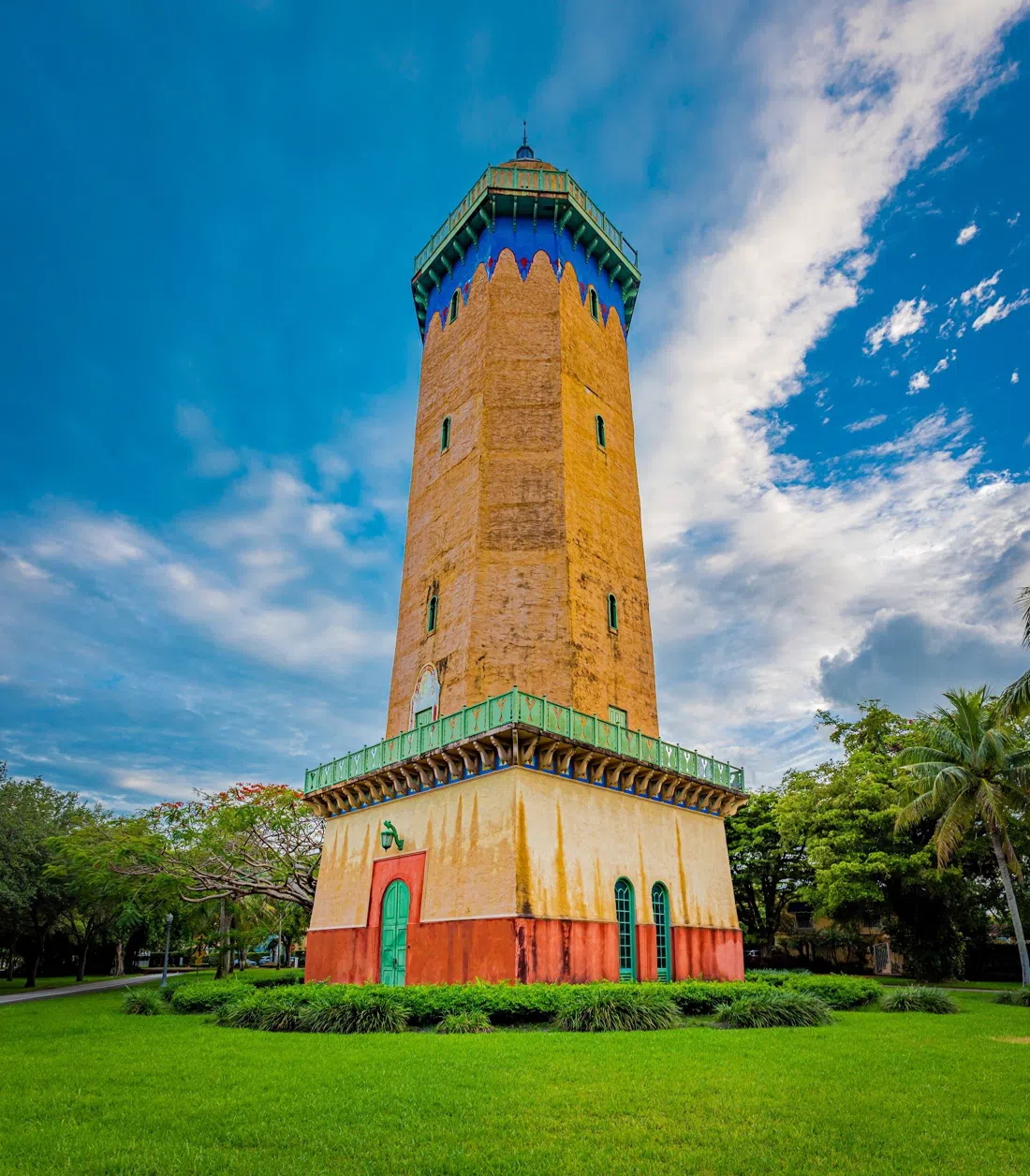
A few stops here reward the visitor willing to go slightly off the main line. The Alhambra Water Tower is proof the Mediterranean fantasy went all the way down to the infrastructure — a castle turret concealing a perfectly ordinary water tank, restored in 1993. It's a free, unbooked outdoor park landmark that works for any group size and takes about five minutes.
The Coral Gables Woman's Club is the quietest stop on this list and the easiest to miss: a Mediterranean Revival interior on the National Register since 1990 that's genuinely less touristed than anything else here, largely because it's primarily an event and rental venue rather than a museum. The exterior is free to view, but interior access is by appointment only — call the rental agent at 305-448-7080 ahead of time rather than turning up expecting a tour.
For a change of register entirely, the Lowe Art Museum at the University of Miami is worth a short detour for its Latin American, Native American and Renaissance/Baroque collections — worth noting plainly that the building itself is mid-century, not Mediterranean Revival, so it's a content detour rather than an architectural one. Casual visits run about $10 for adults and are free for UM affiliates; formal adult group tours need three weeks' notice and a minimum of 10 people, booked through [email protected].
Planning the Day
Coral Gables rewards walking once you're there, but it isn't especially transit-friendly from elsewhere in Miami — a rideshare or rental car from downtown or South Beach is the realistic way in, and the historic core itself is compact enough to cover on foot in a single day, roughly 2–3 miles of walking if you hit everything above. Parking is metered on Miracle Mile and in nearby garages; card payment works everywhere for tickets and meters, though carrying a little cash is worth it for the Venetian Pool's group-rate desk and smaller cafe purchases. Aim to start at the Venetian Pool or the Coral Gables Museum first thing, since both close Mondays, and save the Biltmore's Sunday 2pm tour for a trip that includes a weekend. Budget for a half-day is modest — museum and pool admission plus lunch on Miracle Mile comes in under $60 a person — but a stay at the Biltmore itself pushes the same day into three figures before dinner. For a base within easy reach of all of it, start with a Miami hotel search, and for the rest of the city beyond Coral Gables, the full Miami guide covers where this fantasy sits inside the wider metro.