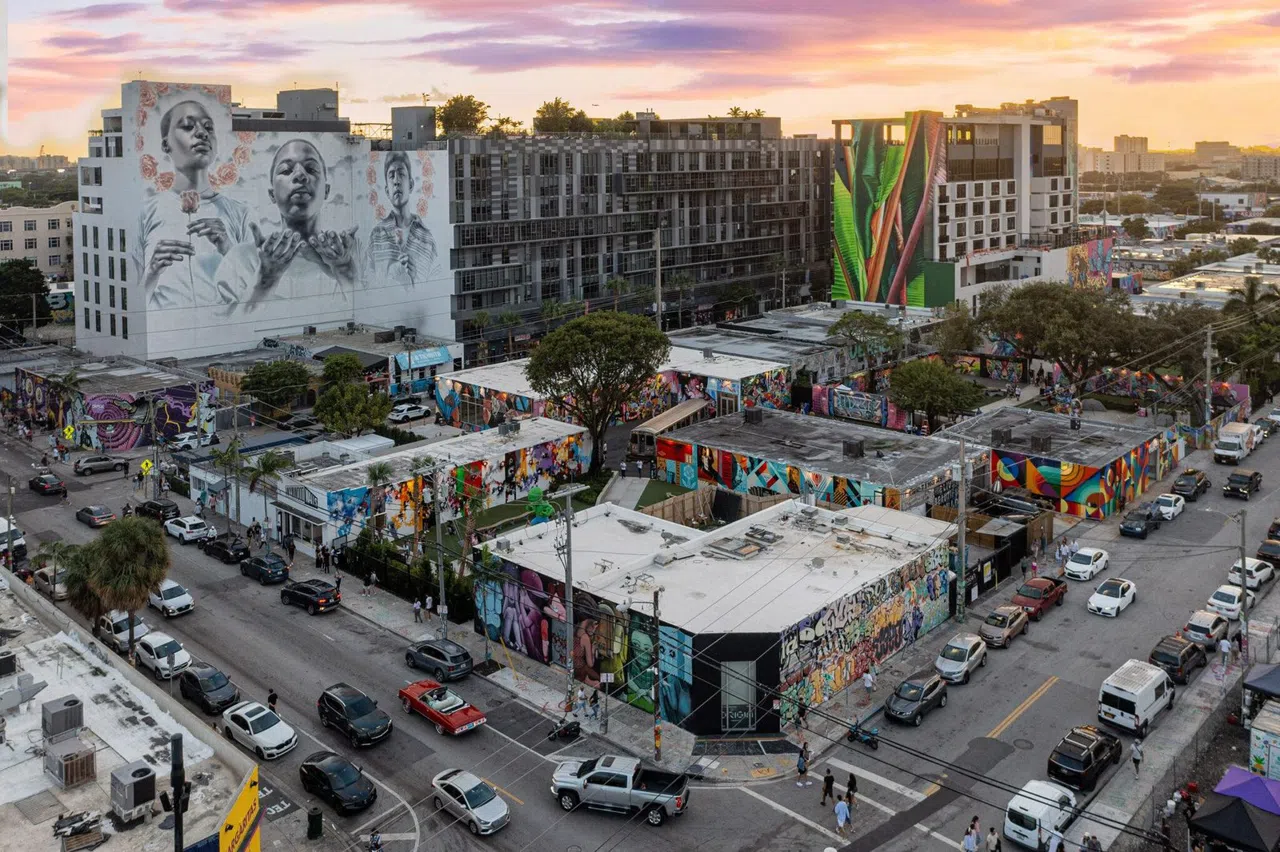
Tony Goldman started buying up warehouse leases in Wynwood in 2009 with a plan that sounded strange at the time: pay street artists to paint the outside walls of a garment district nobody visited after 6pm. Today that bet is the reason anyone comes here at all. There's no sand, no boardwalk, no pastel Art Deco skyline — Wynwood reads industrial before it reads pretty, all low warehouse blocks, corrugated garage doors and chain-link fences, layered floor-to-roofline in spray paint. The centre of gravity is Wynwood Walls on NW 2nd Avenue, a fenced two-acre lot of curated murals by names like Shepard Fairey, and everything else — the restaurants, the breweries, the listening bars — has grown up around it in the decade and a half since.
What Wynwood is known for
Wynwood is Miami's arts-district reinvention story, and it's a fairly recent one. Goldman's original commissioned murals turned into Wynwood Walls, the ticketed two-acre outdoor museum at 2516 NW 2nd Avenue, where the Welcome Center sells entry for a self-guided walking tour or a golf-buggy loop past rotating installations from international and local artists. What makes the district legible as a destination rather than just a collection of good restaurants is that the murals aren't contained to the museum lot — they spill across the surrounding blocks, painted onto the sides of parking structures, gallery walls and taco counters, so the whole neighbourhood functions as an extension of the exhibit.
That single decision — treat blank warehouse walls as canvas rather than liability — is why Wynwood now pulls a crowd that skews younger and louder than most of Miami's other neighbourhoods, and why it functions less like a place to sightsee quietly and more like a place to spend an entire evening moving between a mural, a meal and a bar.
Where to eat and drink
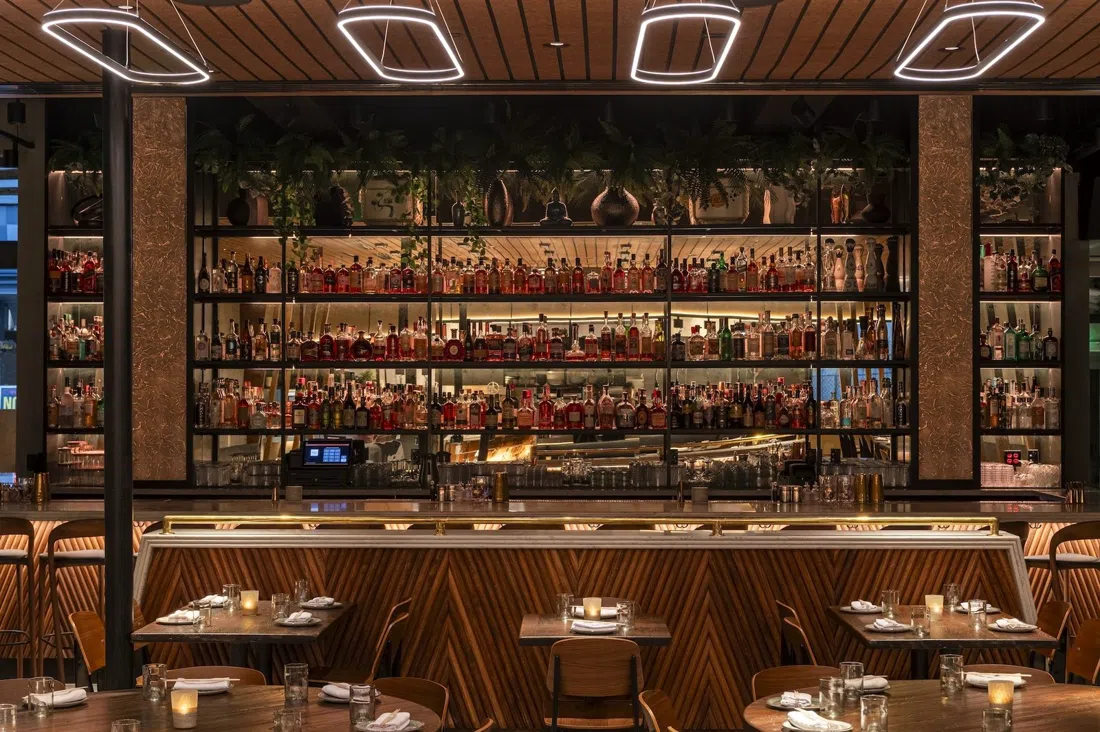
The signature Wynwood meal is KYU, at 251 NW 25th Street, a wood-fired, Asian-influenced restaurant built around a charcoal oven — whole roasted cauliflower, char-grilled short rib, the kind of menu that reads simple on paper and arrives dramatic on the plate. KYU closed for over two years after storm damage, which in a neighbourhood this young felt like losing a landmark, but it reopened in March 2024 and immediately went back to being one of the hardest tables in the district — book ahead or expect a wait at the bar.
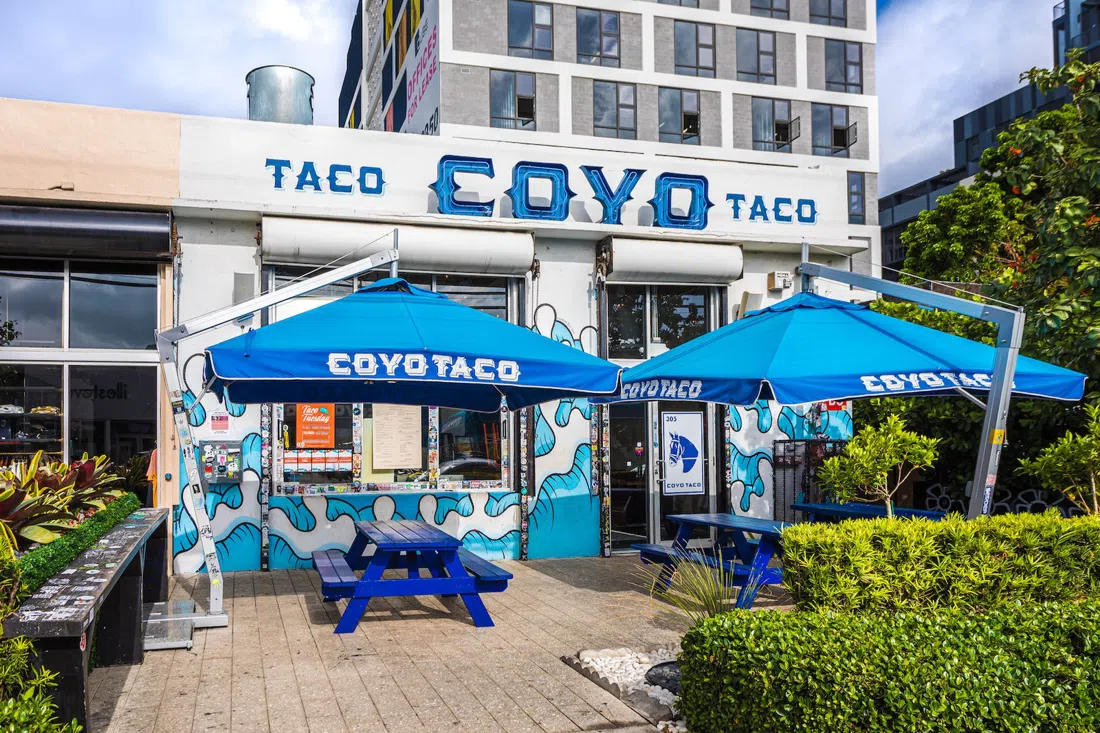
Mornings belong to Zak the Baker, a kosher artisan bakery and cafe where the sourdough and babka draw a brunch queue that starts early and doesn't let up until the cases empty out. It's a useful counterpoint to how expensive Wynwood dinners can get — a coffee and a pastry here is a fraction of a KYU tasting. For later in the day, Coyo Taco does late-night Mexican with handmade tortillas, and the real draw for a lot of regulars isn't even on the menu: a speakeasy hidden behind the counter, reached by walking through what looks like a walk-in fridge door.
Beer drinkers land at Casa La Rubia, the rebranded Wynwood Brewing/Veza Sur taproom with a big indoor-outdoor beer garden that functions as both an afternoon brewery stop and, once the sun goes down, an evening hangout in its own right. Between KYU's tasting-menu prices and Zak the Baker's counter service, the eating-and-drinking scene here covers a wider spread than the district's reputation for expensive cocktails suggests — you can do a whole day here on a bakery breakfast and a taproom dinner and spend a fraction of what a Dante's HiFi night costs.
Nightlife
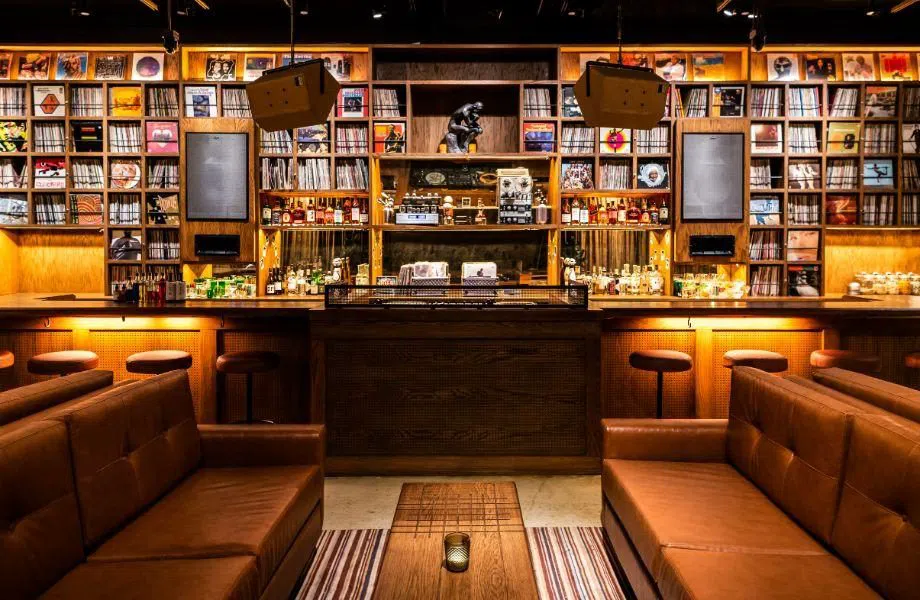
Dante's HiFi, at 519 NW 26th Street, is the neighbourhood's most distinctive bar and arguably the best reason to visit Wynwood after dark at all. It's Miami's first Japanese-style listening bar: you walk through a courtyard into a room built around an audiophile sound system, where resident music director Rich Medina programmes sets from a personal library of more than 8,000 vinyl records. Cocktails lean whisky-forward, service is seated and unhurried, and the whole format — quiet enough to actually hear the record, no shouting over a DJ booth — is a deliberate rebuttal to the club-and-bottle-service model that dominates so much of Miami nightlife.
For something more social, Higher Ground is the rooftop lounge at the Arlo Wynwood hotel, courtyard-style seating built around a resident seagrape tree, and it's the version of a Wynwood evening that looks the way the neighbourhood photographs — string lights, warehouse silhouettes, a crowd that's dressed for a night out rather than a gallery crawl. Casa La Rubia does double duty here too: the same taproom that pours flights in daylight turns into an evening beer-garden hangout once the food trucks roll in and the tables fill up, a lower-key, lower-cost alternative to the cocktail-bar circuit.
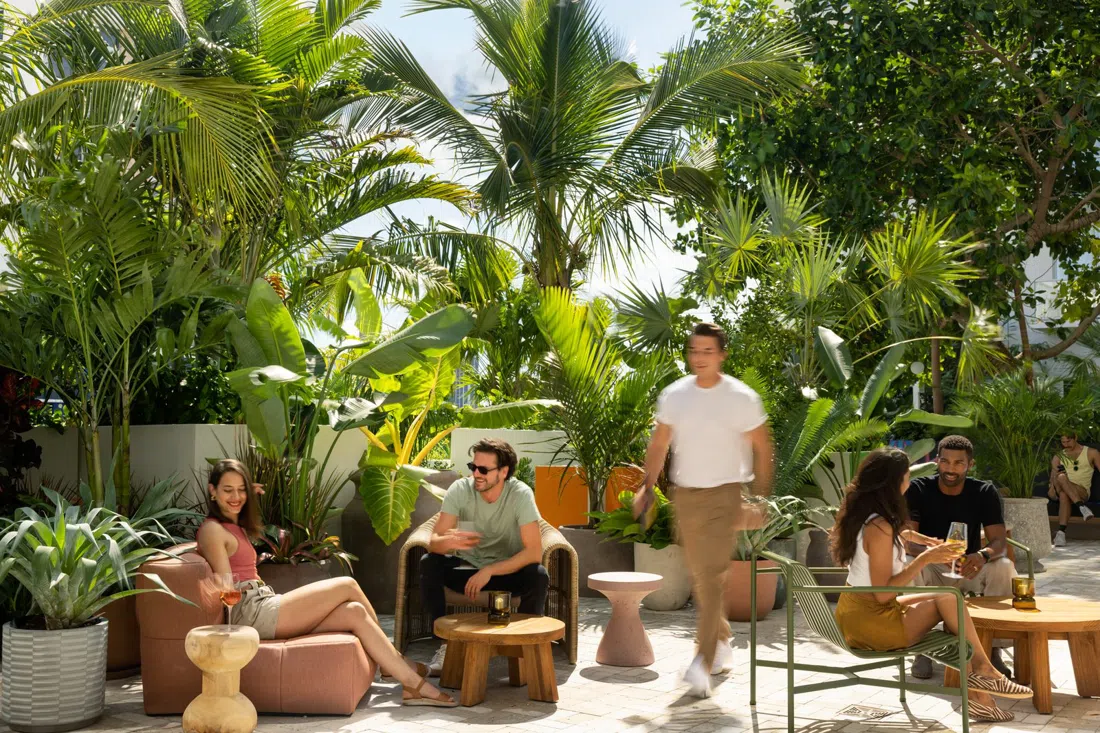
Between the three, you get a decent cross-section of what Wynwood nightlife actually is: not one scene but three registers — a listening room for people who want to sit and talk, a rooftop for people who want to be seen, and a beer garden for people who just want a table outside.
Things to do
Start at Wynwood Walls, 2516 NW 2nd Avenue. Buy a ticket for the guided walking or golf-buggy tour if you want context on the artists, or just walk the perimeter — large sections of mural are visible free from the public sidewalk, which is how most first-time visitors actually experience it before deciding whether to pay for the full lot.
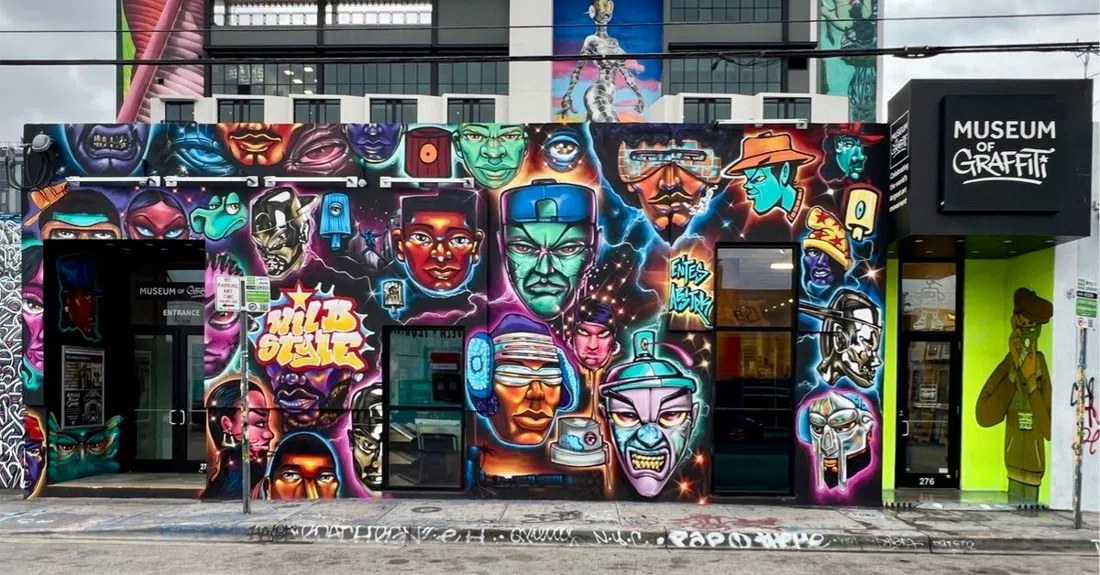
From Wynwood Walls it's a five-minute walk to the Museum of Graffiti at 276 NW 26th Street, an indoor gallery tracing graffiti's history from subway cars to gallery walls, which in 2026 added a working-artist-studio annex so visitors can watch pieces being made rather than only looking at finished ones on a wall.
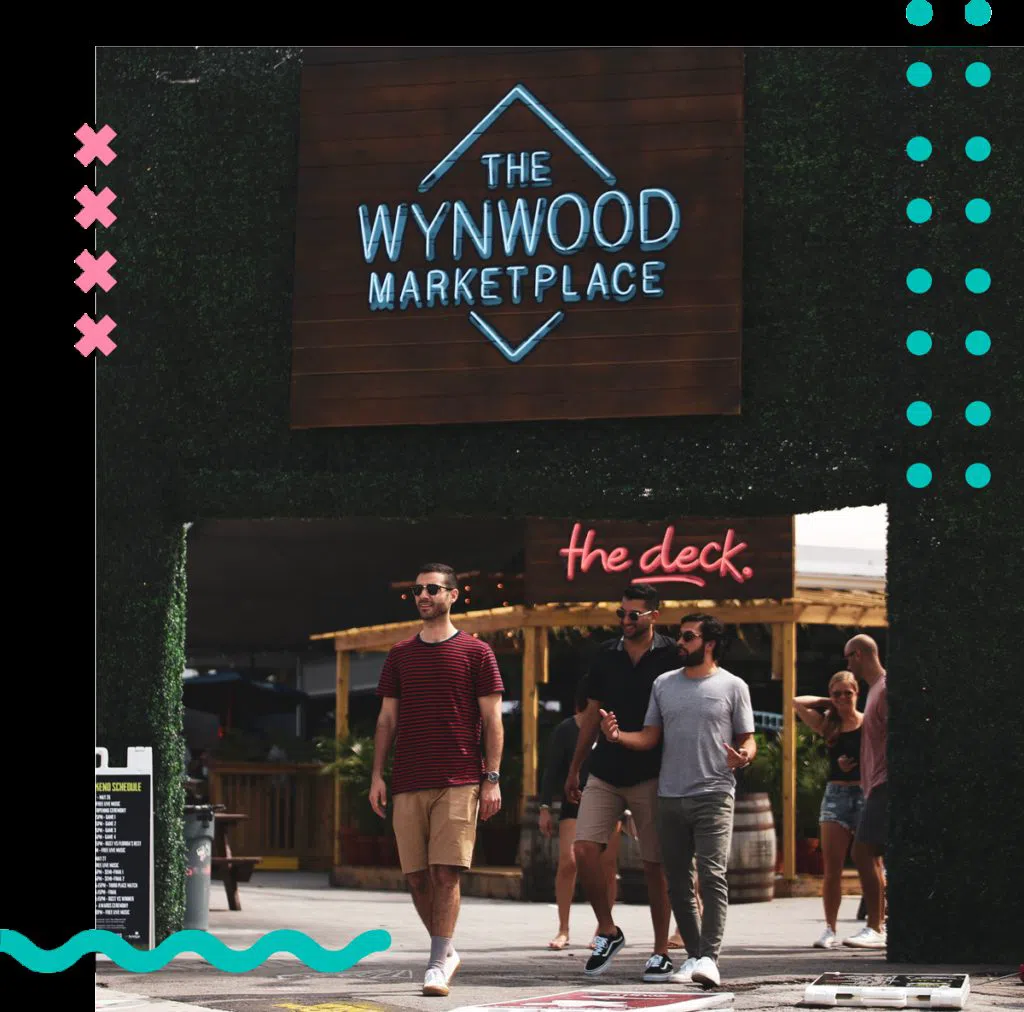
On weekends, Wynwood Marketplace turns a stretch of the district into an outdoor market of food trucks, independent stalls and live music — it's the most casual, least curated version of Wynwood on offer, closer to a street fair than a gallery visit, and a good antidote if the ticketed-museum pace of Wynwood Walls and the Museum of Graffiti starts to feel like a checklist.
Shopping
Wynwood's retail is small, independent and art-adjacent rather than mall-style. Expect concept stores selling streetwear and locally made jewellery tucked between mural-covered facades, a handful of thrift and vintage shops — some run as charity fundraisers — and gallery gift shops attached to the mural walk itself, selling prints and smaller pieces from the artists whose work is on the walls outside. None of it is destination shopping in the way South Beach's retail strips are; it's the kind of browsing you do between a gallery stop and a dinner reservation, not a planned outing on its own.
Where to stay in Wynwood
Wynwood's hotel scene is new and design-led rather than deep — this was a warehouse district a decade ago, so room counts are still small compared with South Beach or Brickell. Arlo Wynwood, at 2217 NW Miami Court, is the district's flagship: a design hotel with a rooftop pool, a 24-hour gym, and its own rooftop bar in Higher Ground, which means the line between staying here and going out here basically disappears — you can start the night on the roof and never leave the building. It suits design-hotel and boutique-stay travellers who want to be inside the neighbourhood's rhythm rather than commuting into it, but it's worth knowing going in that this is a loud, street-level district after dark; light sleepers wanting a room away from noise should factor that into which floor, or which hotel, they book.
Getting around
Wynwood itself is flat and walkable — most of the mural district and restaurant strip fits inside a twenty-minute walk end to end — but there's almost no shade, so midday heat is a bigger obstacle here than distance ever is. Plan gallery-and-mural walking for morning or late afternoon rather than the middle of a Miami summer day. The free City of Miami Trolley's Wynwood route stops right at Wynwood Walls on NW 2nd Avenue, which is the easiest way to link the district to the rest of a Miami itinerary without a car. It also helps that Wynwood sits closer to Downtown and the airport than any other Miami arts district — about 11 to 15 minutes by car from MIA with light traffic, and reachable free from Downtown via Metromover plus a short trolley hop, which makes it a realistic base even for a short layover-length visit.
Worth knowing before you book: Wynwood carries a higher crime index than the Miami average, though it's driven mostly by petty theft — pickpocketing, car break-ins — rather than violent crime, and locals will tell you some blocks feel noticeably safer than others once the main strip empties out. It's not a neighbourhood for a quiet, stroller-friendly evening, and there's no beach to walk to, so it rewards visitors who came for the murals, the food and the noise rather than a swim. For everyone else — the gallery-and-bar-crawl crowd, first-timers who want nightlife over sand, groups doing a brewery hop — it delivers a version of Miami that the postcards mostly skip: industrial, loud, and painted from top to bottom.